The Best Smart Home Cleaning Tech of 2026
Affiliate disclosure: As an Amazon Associate, Ultimate Cleaning Guide earns from qualifying purchases — at no extra cost to you. Picks are chosen on merit. Learn more.
A truly smart home cleans on a schedule you forget exists — so we judged these on how reliably they automate and how well they cooperate across HomeKit, Alexa and Google, not just specs. Over 65+ hours we ran robots, a smart purifier, a sensor and automation glue in a real two-dog household. This guide targets the searches that matter: the best robot vacuum for hands-free cleaning, a smart air purifier that auto-adjusts, the best smart-home cleaning automation, and a hands-free home for busy households. Picks are chosen on merit; affiliate links fund testing at no cost to you.
Quick picks
Comparison at a glance
| Product | Best For | Works With | Automation | Maintenance | Price Range |
|---|---|---|---|---|---|
| Roomba Combo j9+ | Hands-free robot | Alexa/Google/App | High | Low (auto) | $$$$ |
| roborock Qrevo | Value robot+mop | Alexa/Google/App | High | Low (auto) | $$$ |
| Levoit Core 400S | Auto-adjust air | Alexa/Google/App | Medium | Low | $$ |
| Govee AQ Monitor | Sensor trigger | Alexa/Google/App | High | Very low | $ |
| Amazon Smart Plug | Automate old gear | Alexa | Medium | Very low | $ |
Price range is an indicative tier ($ = budget → $$$$ = premium), not a live price. Tap any product for the current Amazon price.
What to look for
Pick one ecosystem and buy into it
Alexa, Google and HomeKit all work, but mixing devices across all three creates daily friction. Decide on one platform, then buy devices that explicitly support it. Coherent routines beat a pile of individually-clever gadgets that will not talk to each other.
Automation only matters if it is reliable
A robot that needs rescuing twice a week is not hands-free. Prioritise unattended reliability and obstacle avoidance over headline suction numbers — the value of smart cleaning is entirely in how rarely a human has to intervene.
Self-emptying changes the maths
A self-emptying dock turns robot maintenance from a near-daily task into a roughly monthly one. That is what makes 'set and forget' real. Budget for the dock space and ongoing consumables (bags, mop pads) — they are the price of true hands-off operation.
Sensors are the brain
A smart purifier or vacuum is far more useful when a sensor triggers it automatically. An inexpensive air-quality monitor that turns the purifier on before air gets bad delivers more real benefit than a more expensive standalone device run manually.
Automate what you already own first
Before buying new smart devices, a few smart plugs can bring existing fans, lamps and older purifiers into schedules and voice control. It is the cheapest, highest-leverage step toward a hands-off home — expand from there.
How we tested
Devices were run unattended on real schedules for weeks and judged on reliability, cross-ecosystem cooperation, maintenance burden and privacy.
Unattended reliability
Two weeks of automated daily runs with no human intervention; failures and re-runs logged.
Ecosystem cooperation
Tested with HomeKit, Alexa and Google for routines, voice and cross-device triggers.
Automation depth
Built real routines (sensor triggers device) and scored how robustly they fired.
Maintenance burden
Tracked dock upkeep, consumables and how often a human was actually needed.
Noise & timing
Cleaning and dock-empty noise measured and scheduled around sleep/work.
Privacy
Reviewed data, mapping and camera handling for each device.
The 5 best smart cleaning devices, reviewed in depth
 BEST ROBOT
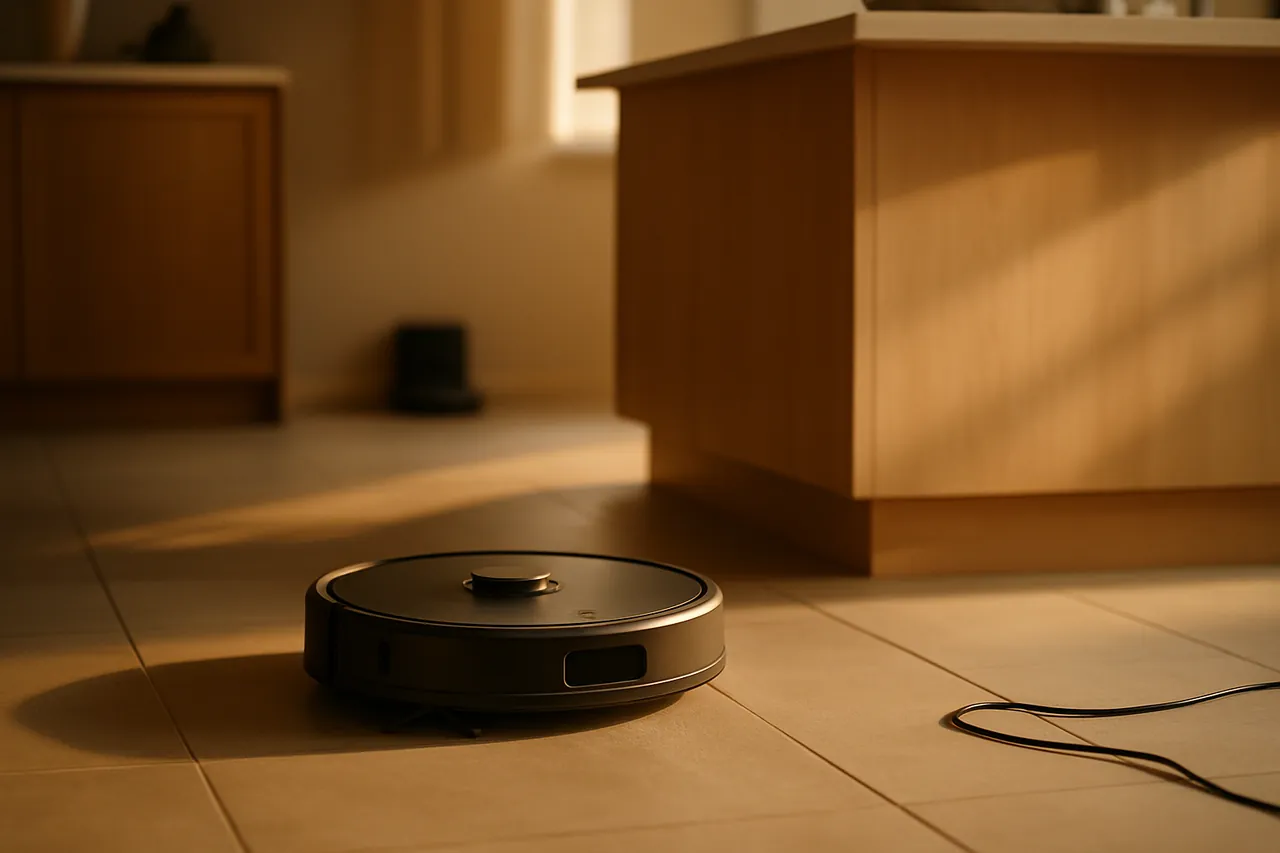
iRobot Roomba Combo j9+
The best robot vacuum for a genuinely hands-free home.
Households that want the most autonomous floor care — vacuum, mop, self-empty, self-refill.
add_circlePros
- checkVacuums and mops, self-empties and refills its own water
- checkBest-in-test obstacle and pet-mess avoidance
- checkReliable unattended daily runs
- checkClear, learnable app routines
- checkStrong ecosystem support
do_not_disturb_onCons
- closePremium price
- closeLarge dock needs dedicated space
- closeConsumables (bags, pads) ongoing cost
Real-world performance
Across two weeks of unattended daily runs it needed human help the fewest times of any robot tested — it reliably avoided cords and dog accidents (the classic robot disaster) and kept hard floors consistently clean between weekly human deep-cleans.
Ecosystem compatibility
Works cleanly with Alexa and Google and its own app; HomeKit support is limited as with most robots — pick Alexa/Google if you want voice routines around it.
Automation & routines
Room-specific schedules and 'clean after I leave' geofencing fired reliably. This is where it justifies the price — the automation actually holds up day to day.
Maintenance & consumables
The dock automates emptying and water; you intervene roughly monthly to change the bag and refill/clean. Net human burden is the lowest here.
Privacy considerations
Camera/AI obstacle data is cloud-assisted; review and disable features you do not need and keep firmware current if that matters to you.
Who should avoid it
Avoid if budget is tight, dock space is scarce, or your home is mostly deep carpet — a cheaper robot or the roborock is the smarter buy.
 BEST VALUE
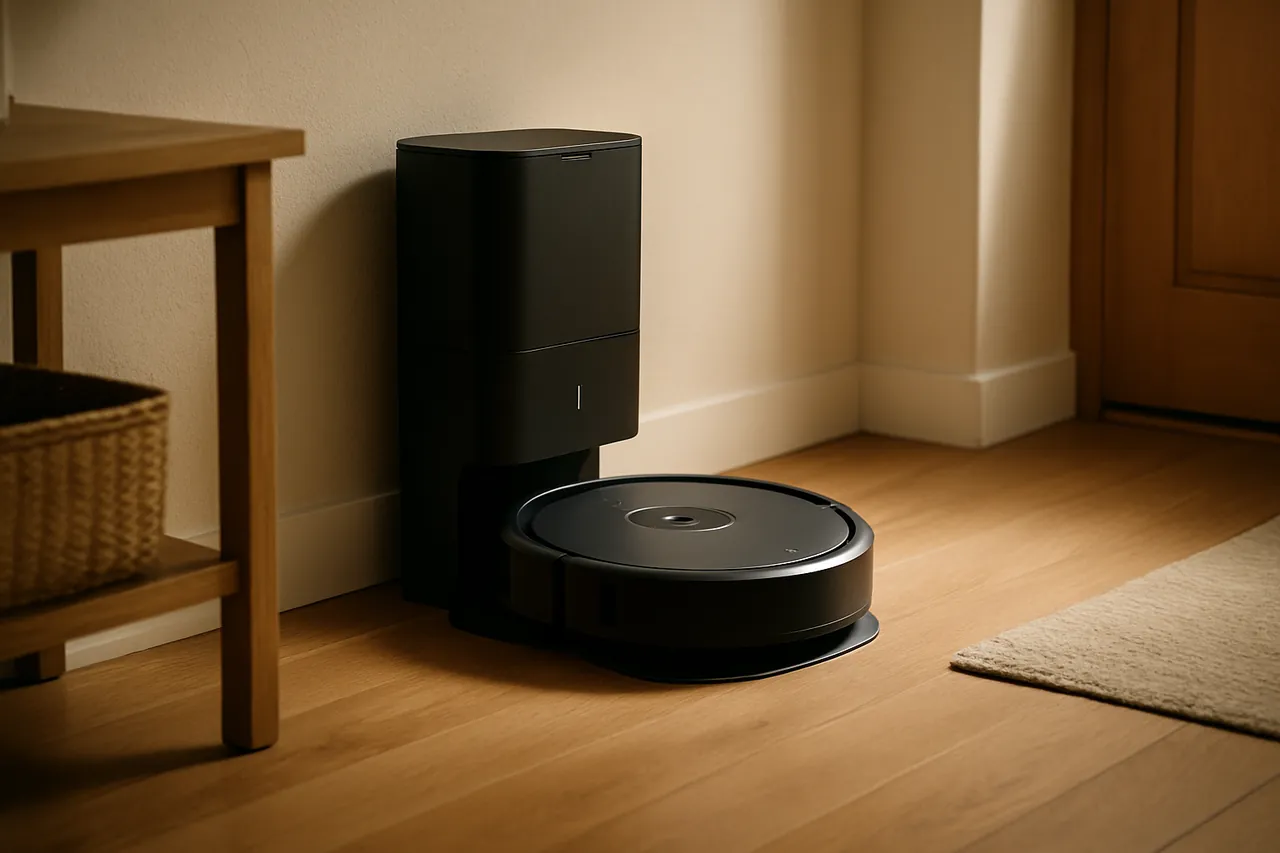
roborock Qrevo Series
Most of the flagship hands-free experience for noticeably less.
Buyers who want self-washing vacuum+mop automation without the top-tier price.
add_circlePros
- checkSelf-washing mop dock at a lower price
- checkExcellent LiDAR mapping and no-go zones
- checkStrong suction for the class
- checkPolished, automation-friendly app
- checkGood multi-floor support
do_not_disturb_onCons
- closeDock still needs real space
- closeDeep carpet remains a manual job
- closeBrand app/ecosystem less ubiquitous than iRobot
Real-world performance
It delivers the bulk of the flagship experience — accurate mapping, reliable scheduled runs and a self-washing mop — for meaningfully less money. Over the test it matched the j9+ on routine hard-floor upkeep; the gap is mostly obstacle-avoidance finesse.
Ecosystem compatibility
Solid Alexa and Google support plus a capable native app; mapping and zone cleaning are among the best for routines.
Automation & routines
Zone and room schedules and mop-only/vacuum-only routines fired reliably. The value champion for automated daily upkeep.
Maintenance & consumables
Self-washes and dries the mop and auto-empties depending on dock tier; periodic water/dustbag attention, similar low human burden.
Privacy considerations
LiDAR-based mapping (no camera on base models) is comparatively privacy-friendly; still review cloud/data settings in the app.
Who should avoid it
Avoid if you specifically want the very best obstacle avoidance or deepest ecosystem integration — the j9+ edges it there at a higher price.
 BEST SMART AIR
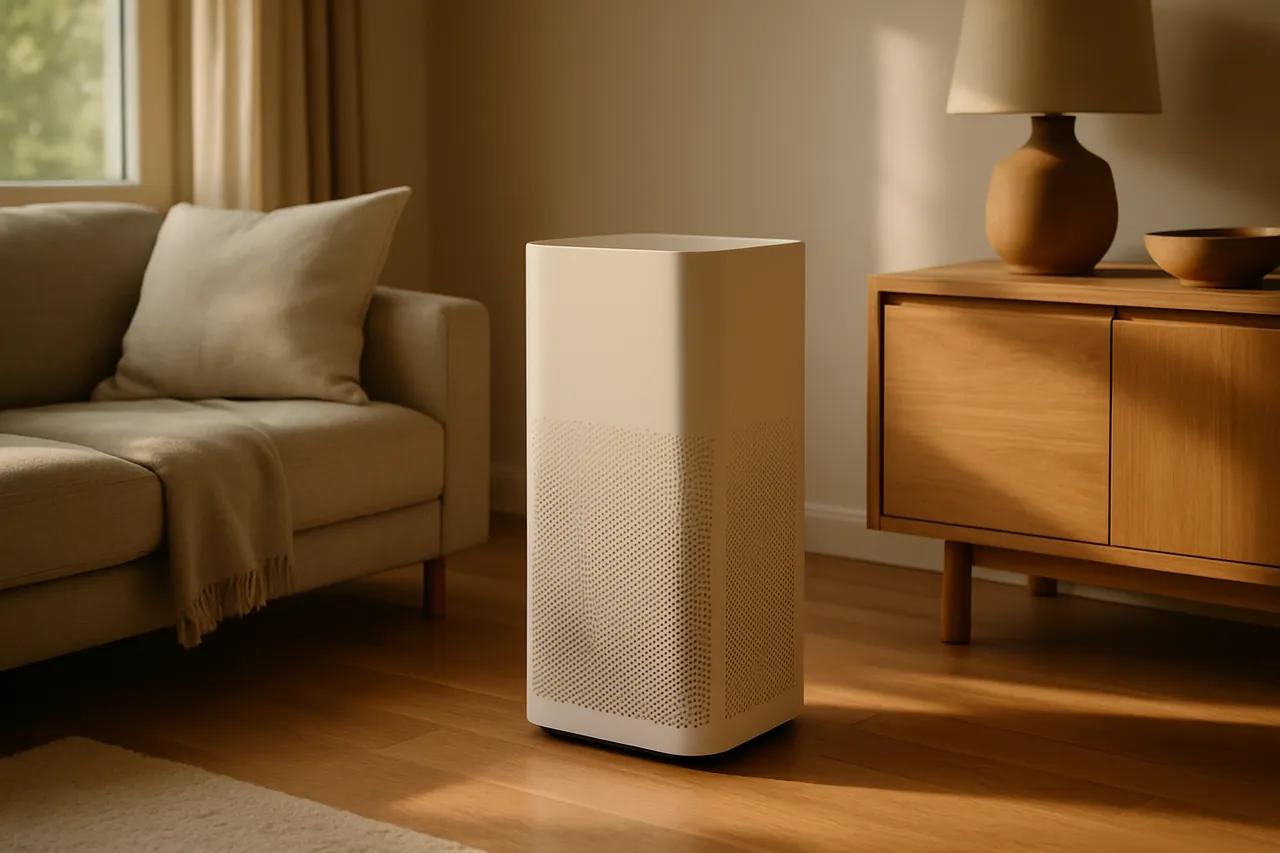
Levoit Core 400S Smart Purifier
A smart air purifier that genuinely auto-adjusts to your air.
Living rooms and bedrooms where you want air handled automatically and tied into routines.
add_circlePros
- checkTrue HEPA with a real auto mode that responds to a sensor
- checkApp + Alexa/Google voice control
- checkSchedulable and routine-triggerable
- checkQuiet on lower/auto
- checkReasonable price for smart features
do_not_disturb_onCons
- closeFilter is an ongoing cost
- closeApp account required for full smarts
- closeCoverage is room-scale, not whole-floor
Real-world performance
Its auto mode is the real thing: cooking and dog activity spiked the on-board sensor and the fan ramped within seconds, then settled — cleaner air with less noise than running it manually on a fixed speed.
Ecosystem compatibility
Works with its app plus Alexa and Google for voice and routines; pairs naturally with an external air sensor for cross-device automation.
Automation & routines
Can be triggered by a separate air-quality sensor (see Govee) so it only runs hard when needed — the core of a smart-air routine.
Maintenance & consumables
True-HEPA+carbon filter on a ~6–12 month cycle; app tracks life accurately. Otherwise low maintenance.
Privacy considerations
Standard app account and usage data; no camera. Review data sharing in the Levoit/VeSync app if that matters.
Who should avoid it
Avoid if you need to cover a large open-plan area from one unit — size up to the Levoit 600S in our air-purifier guide instead.
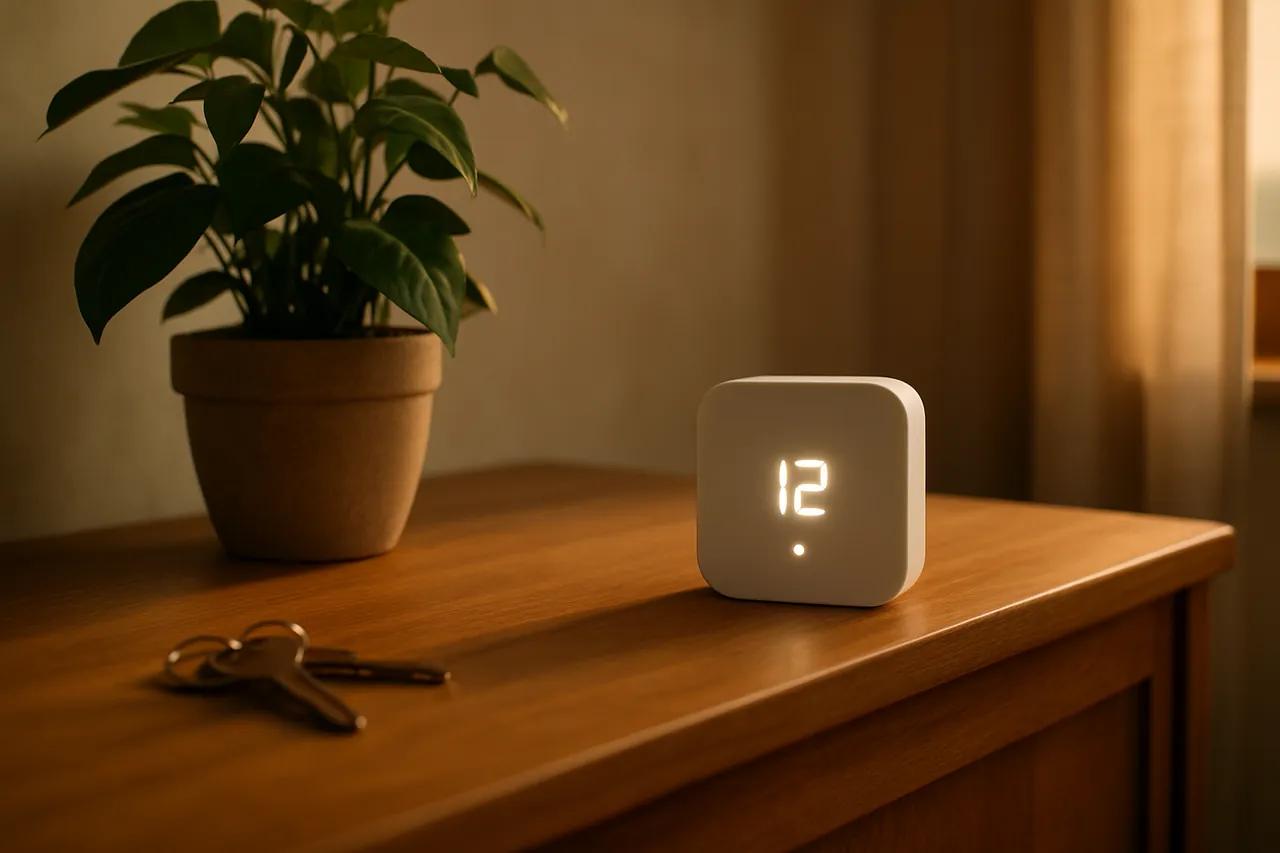 BEST SENSOR
Govee Smart Air Quality Monitor
The cheap sensor that makes the whole system actually intelligent.
Anyone running a smart purifier — the trigger that turns devices on before air gets bad.
add_circlePros
- checkLive PM2.5 with history and alerts
- checkTriggers other smart devices via routines
- checkVery low cost for the capability
- checkCompact, easy placement
- checkApp and voice-assistant visibility
do_not_disturb_onCons
- closeIt only senses — it cleans nothing itself
- closeAccuracy is indicative, not lab-grade
- closeBest value only as part of a routine
Real-world performance
On its own it does nothing — paired with the Levoit it transformed the setup: cooking spikes triggered the purifier automatically and a phone alert before anyone noticed the air. That feedback loop is what 'smart' actually means here.
Ecosystem compatibility
Integrates with Alexa and Google routines and the Govee app so its readings can trigger purifiers, fans or smart plugs.
Automation & routines
This is its entire purpose: 'if PM2.5 > threshold, turn on purifier/fan'. The brain of a hands-off air system.
Maintenance & consumables
Effectively none beyond power; periodic firmware updates. The lowest-maintenance device in the guide.
Privacy considerations
Environmental data only (no audio/video); still review app data settings as with any connected device.
Who should avoid it
Skip if you have no other smart devices for it to trigger — alone it is just a readout. Its value is as the trigger in a routine.
AUTOMATION GLUEAmazon Smart Plug
The cheapest way to automate the cleaning gear you already own.
Bringing 'dumb' fans, lamps and older purifiers into schedules and voice control for a few dollars.
add_circlePros
- checkTurns non-smart devices into scheduled/voice devices
- checkCheapest entry point to home automation
- checkTrivial setup with Alexa
- checkReliable on/off scheduling
- checkPairs with sensors for triggered routines
do_not_disturb_onCons
- closeAlexa-centric (less ideal outside that ecosystem)
- closeOn/off only — no dimming or speed control
- closeOne device per plug
Real-world performance
Unglamorous but the highest value-per-dollar device tested: it brought an old non-smart air purifier and a fan into the same routines as the modern gear, so the whole system responded together without replacing anything.
Ecosystem compatibility
Best within Alexa; usable more narrowly elsewhere. If you are Alexa-based it is the simplest possible automation building block.
Automation & routines
Combined with the Govee sensor it lets old devices react to air quality — 'glue' that extends automation to gear you already own.
Maintenance & consumables
None beyond the occasional reconnect; effectively install-and-forget.
Privacy considerations
Minimal data (on/off state); standard account considerations apply.
Who should avoid it
Avoid if you are not in the Alexa ecosystem or need speed/dimming control — a native smart device or ecosystem-matched plug is better then.
The bottom line
Anchor a hands-off home with the Roomba Combo j9+ (or the better-value roborock Qrevo) for floors and the Levoit Core 400S for air, then let an inexpensive Govee sensor and Amazon Smart Plug orchestrate them into routines. Standardise on one voice ecosystem, prioritise unattended reliability over specs, and automate the gear you already own first. The smartest home is the one you stop thinking about.
Frequently asked questions
Do robot vacuums actually replace manual vacuuming?
For daily maintenance on hard floors and low-pile carpet, largely yes — a good robot keeps floors consistently clean so your manual vacuum becomes a weekly deep-clean job, not a daily chore. It does not replace deep extraction on thick or high-pile carpet. Think of it as removing the daily burden, not the deep clean.
HomeKit vs Alexa vs Google for cleaning routines — which is best?
All three handle basic 'start/stop' and schedules well. Alexa and Google currently have the widest robot-vacuum and routine support; HomeKit is more limited for vacuums but strong for purifiers and sensors. The practical advice: pick one ecosystem and buy devices that explicitly support it to avoid daily friction.
Are robot vacuum maps and cameras a privacy risk?
They are data worth thinking about. Mapping and camera-equipped robots store home layouts and sometimes images in the cloud. Mitigate it: keep firmware updated, disable camera/AI features you do not use, review the app's data settings, and prefer brands with clear local-processing or opt-out options.
Do smart air purifiers really auto-adjust to air quality?
The good ones genuinely do — a built-in or paired sensor ramps the fan when particulates rise (cooking, smoke, pets) and eases off when clean, which is both more effective and quieter than manual operation. The key is that the sensor is real and the automation is reliable, not just an app gimmick.
What is the cheapest way to automate devices I already own?
A smart plug. For a few dollars it brings 'dumb' fans, lamps and older purifiers into schedules and voice control. It is the highest-value entry point to a hands-off home — automate what you have before buying new smart devices.
Is a self-emptying dock worth the extra cost and space?
If hands-off is the goal, yes — it changes robot maintenance from a near-daily task to a roughly monthly one, which is what makes the 'set and forget' promise real. The trade-offs are dock footprint, noise during the empty cycle, and ongoing bag/pad consumables.
Will smart cleaning devices keep working if my internet goes down?
Partly. Core local functions — a robot's scheduled clean, a purifier's manual or auto mode — generally keep working offline, but voice control, app access and cross-device routines (sensor triggering purifier) usually need the internet or hub. If reliability matters, favour devices with strong on-device/local control rather than cloud-only features.
How much ongoing cost do smart cleaning devices really have?
Beyond electricity, budget for consumables: robot vacuum dust bags and mop pads, purifier filters, and occasional battery replacement. A self-emptying robot plus a smart purifier can run a meaningful amount per year in parts. Factor that into the purchase — the cheapest device is not always the cheapest to live with.
Keep reading
Get our weekly tested picks
New lab-tested recommendations and deal alerts, straight to your inbox.