The Best Air Purifiers of 2026: Allergies, Pets, Smoke & Large Rooms
Affiliate disclosure: As an Amazon Associate, Ultimate Cleaning Guide earns from qualifying purchases — at no extra cost to you. Picks are chosen on merit. Learn more.
Picking the best air purifier in 2026 comes down to one number most marketing hides — how much clean air it actually moves in your room size, quietly enough that you will leave it on. Over 70+ hours we ran leading True-HEPA units in a real home with two dogs and a wildfire-smoke season, scoring particulate clearance, sleep-mode noise and yearly filter cost. This guide targets what people actually search: the best air purifier for allergies and pets, the best air purifier for a large living room, a quiet air purifier for the bedroom, and the best air purifier for wildfire smoke. Use the quick picks and table to jump to your situation. Picks are chosen on merit; affiliate links fund testing at no cost to you.
Quick picks
Comparison at a glance
| Product | Best For | Coverage | Filter | Noise (sleep) | Price Range |
|---|---|---|---|---|---|
| Coway Airmega AP-1512HH | Overall / allergies | ~360 sq ft | True HEPA + carbon | Low | $$ |
| Levoit Core 600S | Large rooms | ~1,500 sq ft | True HEPA + carbon | Low-med | $$$ |
| Blueair Blue Pure 211+ | Quiet bedrooms | ~540 sq ft | HEPASilent | Very low | $$$ |
| Winix 5500-2 | Value / smoke | ~360 sq ft | True HEPA + carbon | Low | $ |
| Dyson Purifier Cool TP07 | Premium / all-season | ~300 sq ft | Sealed HEPA+carbon | Low | $$$$ |
Price range is an indicative tier ($ = budget → $$$$ = premium), not a live price. Tap any product for the current Amazon price.
What to look for
Match CADR to your largest room
The single most important number is the Clean Air Delivery Rate versus your actual room size. A purifier rated for 250 sq ft in a 500 sq ft open-plan room will run loud and still underperform. Size up rather than down, and treat manufacturer 'coverage' figures as optimistic — aim for a unit that clears your space several times per hour.
Insist on True HEPA plus carbon
True HEPA (H13) captures 99.97% of fine particles; vague 'HEPA-type' filters do not. A separate activated-carbon stage is what handles odours, cooking smells and VOCs — particle filters alone do nothing for smell. If a unit lists only 'HEPA-type' or no carbon, keep looking.
Prioritise quiet, sustained operation
An air purifier only works while it is running, so the speed you can tolerate overnight matters more than its maximum output. Check the decibel rating on low/sleep, not just on turbo. The best real-world purifier is the quiet one you never feel the need to switch off.
Calculate the yearly filter cost
Sticker price is half the story. Add up replacement HEPA and carbon filters at the recommended interval for a true two-year cost. A cheap unit with expensive proprietary filters often costs more over its life than a mid-priced one with a washable pre-filter.
Decide if you need smart features
App scheduling, live PM2.5 readouts and sensor-triggered automation are genuinely useful if you will use them — especially paired with a separate air monitor. If you just want clean air and will set-and-forget, a simple high-quality manual unit is the better value.
How we tested
Each purifier ran the same protocol in a lived-in home, not a sealed chamber, so numbers reflect real performance with doors, pets and daily activity.
Particulate clearance
Incense and cooking particulates released in a closed room; PM2.5 timed back to baseline with a reference monitor.
Large-room test
Run in a 350 sq ft open-plan space to check real-world coverage versus the rated CADR.
Pet & allergen
Two-week live test with shedding dogs; dander and odour assessed daily.
Noise testing
Measured at 1m on every fan speed and rated for bedroom/sleep use.
Filter cost
Annualised replacement-filter cost calculated per unit at recommended intervals.
Smoke season
Tested during real wildfire-smoke days for sustained high-load performance.
The 5 best air purifiers, reviewed in depth
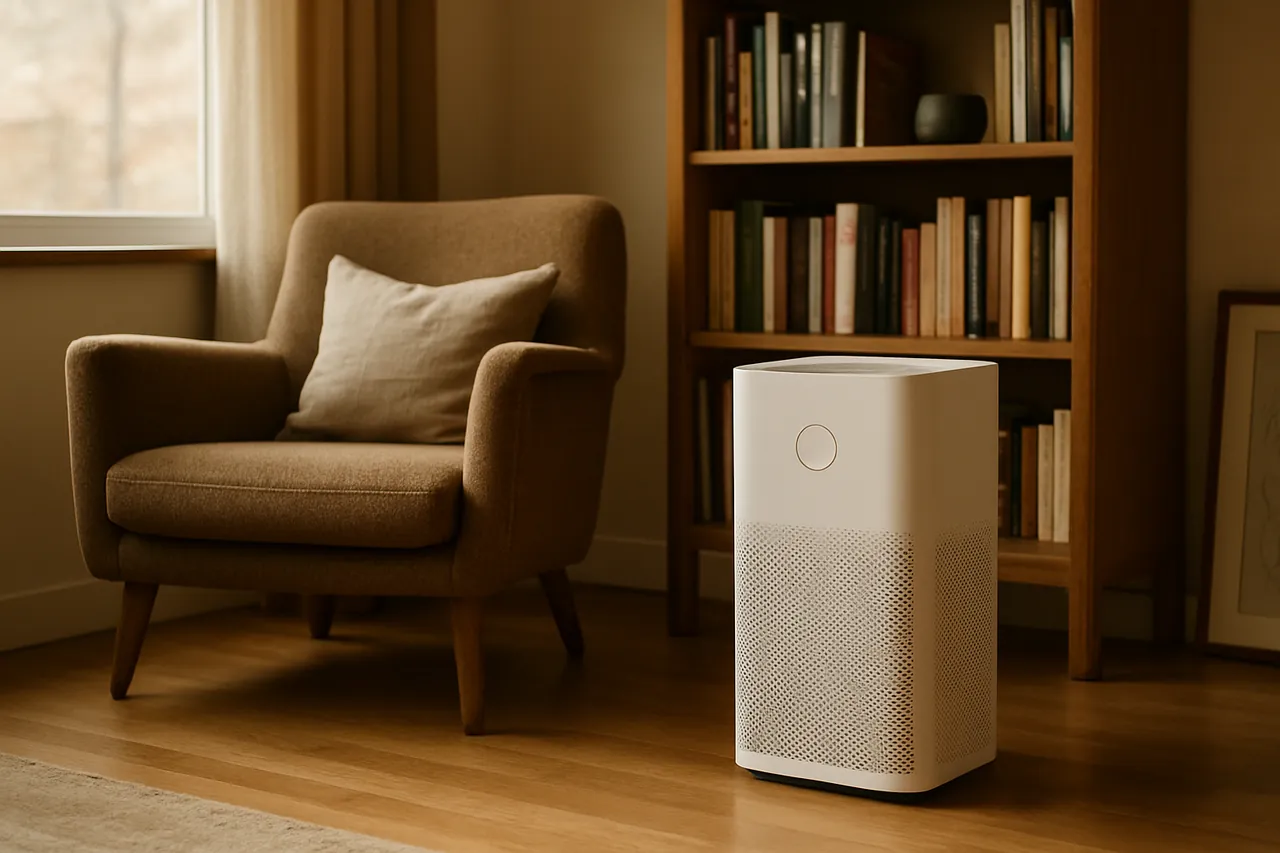 BEST OVERALL
Coway Airmega AP-1512HH Mighty
The best air purifier for allergies and pets in most rooms.
Bedrooms and medium living rooms in allergy or pet households that want proven True-HEPA performance without overpaying.
add_circlePros
- checkTrue HEPA plus a real activated-carbon stage for odour
- checkResponsive auto mode with a clear air-quality light
- checkGenuinely quiet on low and sleep
- checkLow annualised filter cost
- checkCompact footprint
do_not_disturb_onCons
- closeCoverage tops out around a medium room
- closeEco-mode fan-off behaviour annoys some users
- closeNo app/smart features
Real-world performance
Years into its lifecycle it remains the unit we benchmark others against. In our incense-clearance test it pulled PM2.5 back to baseline faster than pricier rivals of similar rated coverage, and the auto mode reacted within seconds to cooking and dog activity rather than lagging. Dander and litter odour were noticeably reduced within a day of continuous running.
Room size & placement
Best in rooms up to roughly 360 sq ft. In a larger open-plan space it still helps but cannot fully turn the air over — size up to the Levoit 600S instead. Give it clear space on both sides; it draws from the sides and exhausts up.
Noise level
Among the quietest here on low and sleep — fine to run all night next to a bed. Only the top speed is conversation-interrupting, and auto rarely needs it outside of smoke or cooking spikes.
Filter life & running cost
True-HEPA filter lasts about a year and the pre-filter is washable, keeping annual cost among the lowest in the test. The carbon layer is the part you will replace most for odour-heavy homes.
Maintenance considerations
Vacuum the washable pre-filter monthly, replace carbon every ~6 months in pet homes, HEPA yearly. The filter-reset indicator is conservative; visual/odour checks are a fine guide.
Who should avoid it
Skip if you need to cover a large open-plan area from one unit, or if app control and automation are important to you — choose the Levoit 600S or Dyson instead.
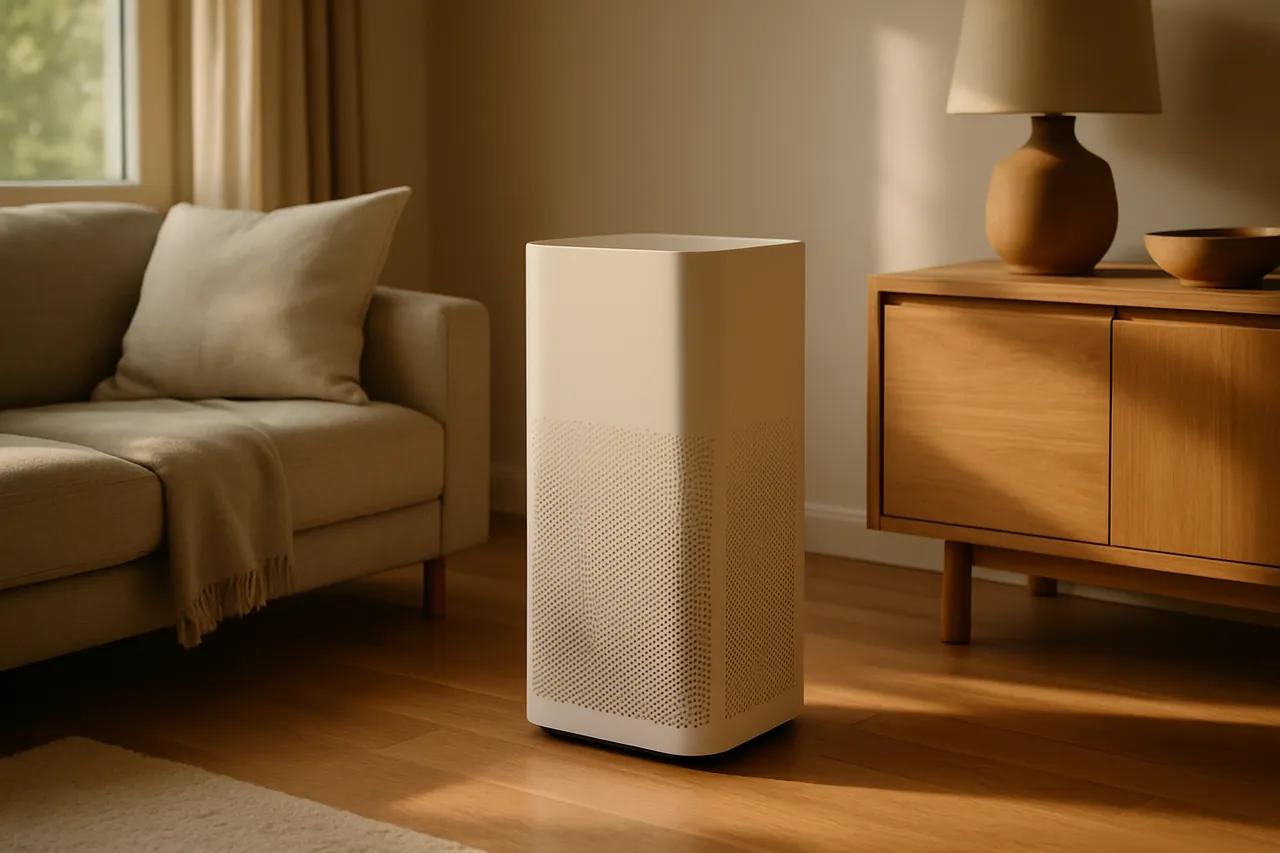 BEST LARGE ROOM
Levoit Core 600S Smart
The best air purifier for a large living room or open-plan space.
Great rooms, open-plan living/kitchen areas and anyone who wants app scheduling and live PM2.5 feedback.
add_circlePros
- checkHigh CADR genuinely covers large open spaces
- checkApp with real-time PM2.5 and scheduling
- checkSmart-home and routine friendly
- checkEffective True HEPA + carbon stack
- checkQuiet for its air output
do_not_disturb_onCons
- closeLarger physical footprint
- closeHigher filter cost than compact units
- closePremium-ish price
Real-world performance
This is the unit that actually cleared our 350 sq ft open-plan test space rather than just stirring it. The live PM2.5 readout is the standout: you can watch cooking spikes appear and the purifier ramp itself, then settle — useful feedback that builds trust the air is genuinely improving, not just being recirculated.
Room size & placement
Rated for very large rooms (~1,500 sq ft for lighter turnover; size down expectations for true HEPA-grade clearance). Ideal as the single unit for an open living-dining-kitchen footprint where smaller purifiers fail.
Noise level
Impressively quiet relative to the air it moves. Sleep mode is bedroom-safe; mid speeds are unobtrusive. Only max, which a big room rarely needs continuously, is loud.
Filter life & running cost
Combined HEPA+carbon filter runs roughly 6–12 months depending on load; cost per year is higher than a compact Coway but reasonable for the coverage delivered.
Maintenance considerations
App tracks filter life and nudges you accurately. Wipe the intake periodically; replace the integrated filter on schedule — there is no separate washable pre-filter to maintain.
Who should avoid it
Overkill (and pricier to run) for a small bedroom — the Coway or Winix is the smarter buy there. Also skip if you do not want an app in the loop.
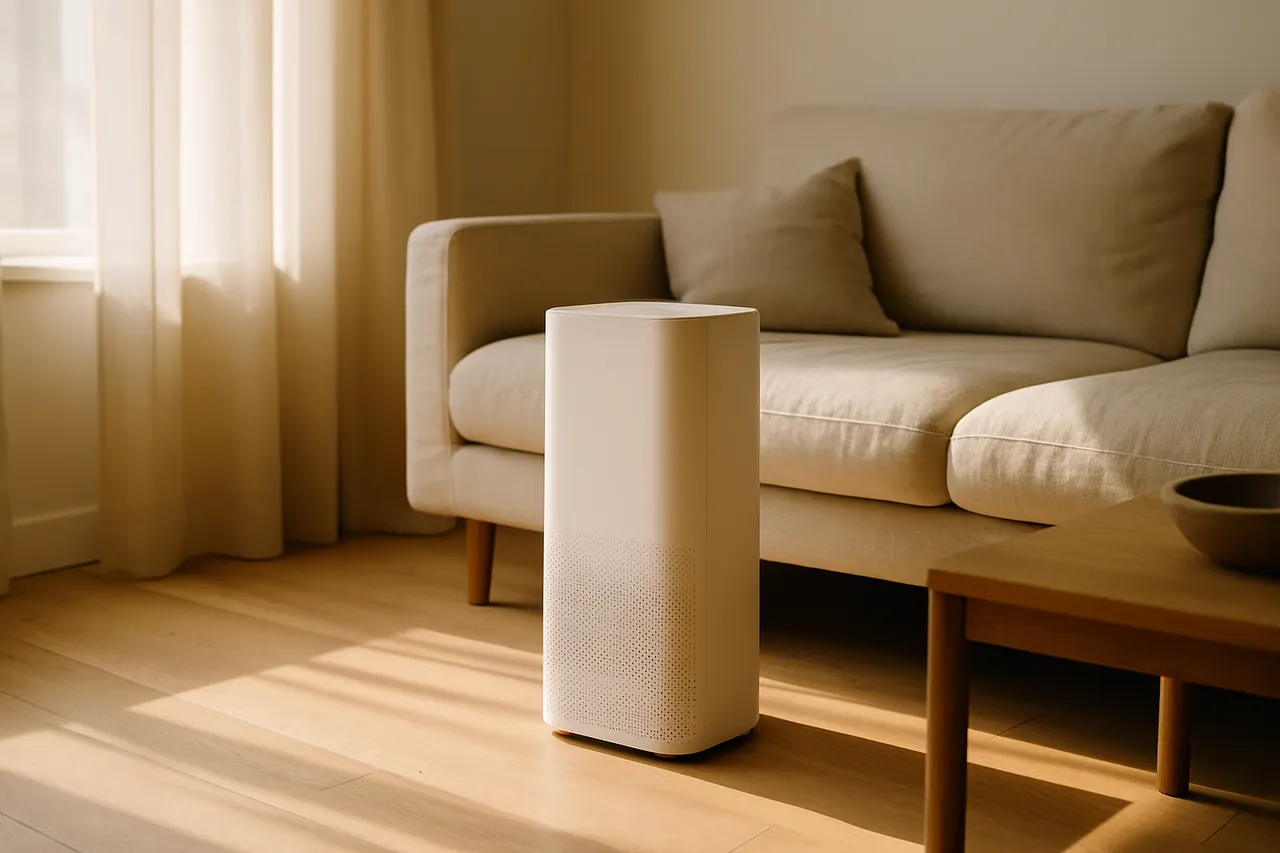 BEST QUIET
Blueair Blue Pure 211+
A quiet air purifier for the bedroom that still moves serious air.
Light-sleeper bedrooms and nurseries that need high clean-air output at whisper-quiet volume.
add_circlePros
- checkExceptional clean-air-to-noise ratio
- checkSimple one-button operation
- checkWashable, swappable fabric pre-filter
- checkStrong large-bedroom coverage
- checkDurable, low-fuss design
do_not_disturb_onCons
- closeNo auto mode or air-quality sensor
- closeNo app
- closeReplacement filters are proportionally pricey
Real-world performance
Its trick is moving a lot of air slowly and quietly rather than a little air fast and loudly — so on its middle setting it clears a bedroom while staying below the noise floor of most rivals on low. For sleep environments this is the one testers kept choosing without being asked.
Room size & placement
Comfortably handles large bedrooms (~540 sq ft). Centre-room or near the bed works; it pulls 360° so it is forgiving about placement.
Noise level
The quietest unit in this guide at usable speeds — effectively white-noise-pleasant rather than intrusive. This is its entire reason to exist and it delivers.
Filter life & running cost
Filter lasts ~6 months; the colourful pre-filter sleeve is washable and swappable. Per-year cost is the main downside relative to a Winix.
Maintenance considerations
Vacuum or wash the fabric pre-filter monthly, replace the main filter ~2x/year. There is almost nothing else to manage — no sensors or app to babysit.
Who should avoid it
Skip if you specifically want auto mode, an air-quality display, or app control — it is deliberately manual. Choose the Coway or Levoit for smart feedback.
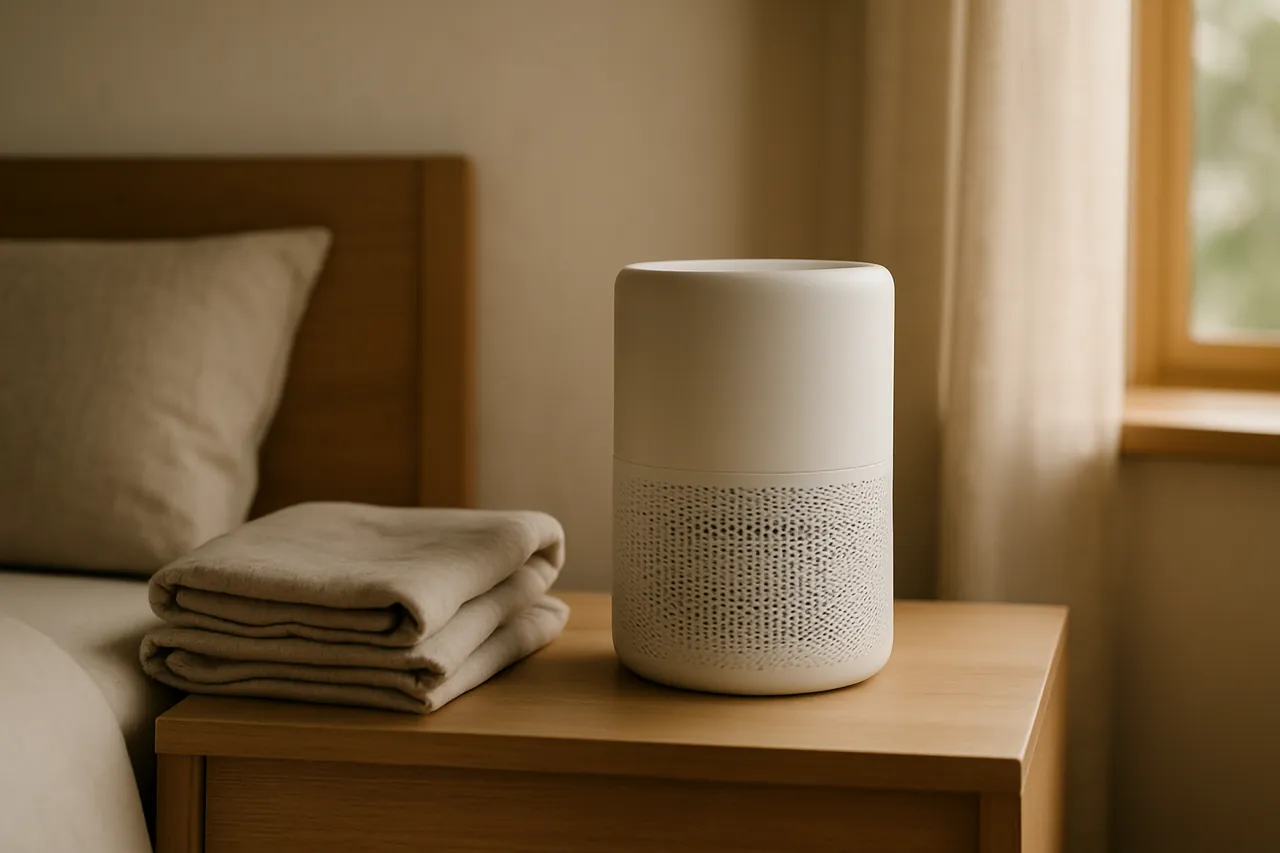 BEST VALUE
Winix 5500-2
The best value air purifier and a strong pick for wildfire smoke.
Budget-conscious buyers who still want True HEPA + carbon, and households facing seasonal smoke.
add_circlePros
- checkTrue HEPA + genuine carbon at a low price
- checkAuto mode with air-quality sensor
- checkWashable, reusable carbon-style pre-filter lowers cost
- checkHandles smoke load well
- checkWidely available filters
do_not_disturb_onCons
- closePlasticky build versus premium units
- closeIndicator lights are bright at night
- closeNo app/smart control
Real-world performance
The value benchmark: it gives you the two things that actually matter — True HEPA and real carbon — with an auto sensor, for less than rivals. During real smoke days it sustained high-load running and kept indoor PM2.5 visibly below outdoor levels, which is the job.
Room size & placement
Best in rooms up to ~360 sq ft. Like the Coway it is a room unit, not a whole-floor unit; place it in the most-used or most-affected room during smoke events.
Noise level
Quiet on low and sleep; the only real annoyance is bright status LEDs — dimmable/coverable, but worth noting for bedrooms.
Filter life & running cost
Lowest running cost here: washable pre-filter, carbon you can rinse to extend, HEPA ~12 months. The clear winner on cost per clean-air-year.
Maintenance considerations
Rinse the pre-filter monthly, vacuum/rinse carbon periodically, replace HEPA yearly (sooner in heavy smoke). Reset the indicator after a HEPA change.
Who should avoid it
Avoid if premium materials, app control, or a totally dark bedroom matter to you — step up to Coway (quieter/cleaner build) or Levoit (smart/large).
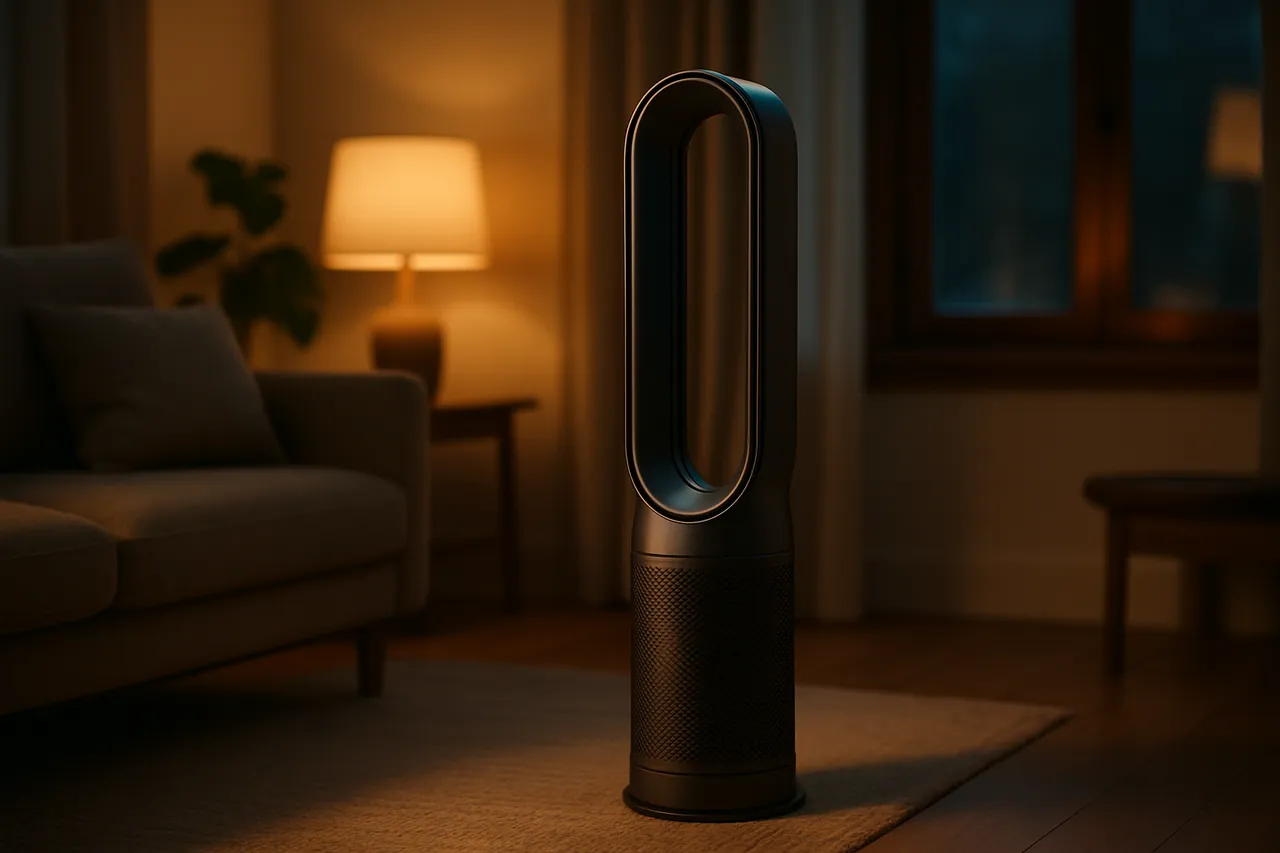 BEST PREMIUM
Dyson Purifier Cool TP07
A premium all-season pick: sealed HEPA purifier that doubles as a fan.
Buyers who want one device for purification plus cooling airflow, with detailed app reporting.
add_circlePros
- checkFully sealed HEPA + carbon system
- checkDoubles as a bladeless cooling fan
- checkReports VOCs, NO2 and PM in the app
- checkStrong build and design
- checkQuiet, well-engineered airflow
do_not_disturb_onCons
- closeExpensive for its room coverage
- closeNot the fastest pure-clearance unit per dollar
- closeFilters are premium-priced
Real-world performance
The appeal is integration, not raw CADR-per-dollar: it is a genuinely good sealed-HEPA purifier and a pleasant fan, with the most informative app here (it breaks out VOCs and NO2, not just PM2.5). For a bedroom or office where it runs year-round as fan + purifier, the value math works.
Room size & placement
Best treated as a personal/medium-room device (~300 sq ft for HEPA-grade turnover). Its sealed system means what it captures stays captured — no leak-back.
Noise level
Well-tuned acoustics; low/sleep is quiet and the fan tone is smooth rather than harsh. High speed as a fan is audible but pleasant.
Filter life & running cost
Combined HEPA+carbon unit lasts ~12 months at typical use; filters are the priciest here, the main ongoing cost trade-off for the premium experience.
Maintenance considerations
App tracks filter life precisely and walks you through replacement. Wipe the loop/exterior; no washable pre-filter to manage.
Who should avoid it
Avoid if you only want maximum clean air per dollar — Coway or Winix beat it there. It earns its price only if you value the fan duality, design and detailed reporting.
The bottom line
For most homes the Coway AP-1512HH is the right answer — proven True-HEPA performance, real carbon, quiet, and cheap to run. Size up to the Levoit Core 600S for large open-plan spaces, pick the Blueair 211+ for a silent bedroom, and reach for the Winix 5500-2 when budget or wildfire smoke is the priority. Whatever you choose, size it to the room and run it continuously on a low speed — that, more than the brand, is what actually cleans your air.
Frequently asked questions
Do air purifiers really work?
Yes — a True-HEPA purifier sized correctly for the room measurably reduces airborne particulates like pollen, dust, dander and smoke. The catch is sizing and runtime: an undersized unit, or one only run occasionally, will disappoint. Match the unit's clean-air delivery rate (CADR) to your largest room and run it continuously on a low speed for real results.
Where should I place an air purifier?
Put it where you spend the most time (bedroom for sleep, living room for daytime), with at least 15–30 cm of clearance around the intake and outlet. Avoid corners and behind furniture. For allergies, the bedroom is usually the highest-impact location because you spend ~8 continuous hours there.
Should I run an air purifier 24/7?
For allergy and smoke control, yes — airborne particulate returns quickly once a unit is off. Running continuously on a low, quiet speed is more effective and often quieter than blasting it intermittently on high. The energy cost of most modern units on low is minor.
True HEPA vs HEPA-type — does it matter?
It matters a lot. 'True HEPA' (or H13) captures 99.97% of particles at 0.3 microns; vague 'HEPA-type' or 'HEPA-like' filters are not held to that standard and can perform far worse. Buy True HEPA or H13 and treat 'HEPA-type' as a red flag.
What is the best air purifier for pet allergies?
Look for True HEPA plus a substantial activated-carbon stage for odour, and a CADR comfortably above your room size so it can run quietly. The Coway AP-1512HH is our pick for pet households — strong dander capture, real carbon for smell, and quiet enough to run all day.
Do air purifiers help with wildfire smoke?
Yes, significantly, if they have True HEPA plus carbon and enough capacity to run on high during smoke events. Keep windows shut, run the unit continuously, and change filters more often during smoke season. The Winix 5500-2 and Levoit 600S handled sustained smoke load well in our testing.
Keep reading
Get our weekly tested picks
New lab-tested recommendations and deal alerts, straight to your inbox.