The Best Pressure Washers of 2026
Affiliate disclosure: As an Amazon Associate, Ultimate Cleaning Guide earns from qualifying purchases — at no extra cost to you. Picks are chosen on merit. Learn more.
Most homeowners over-buy pressure washers. The honest truth is that a mid-range electric handles driveways, decks, siding and cars perfectly well, and the jump to gas is about range and relentless power, not everyday cleaning. This guide is built around that decision — electric versus gas, and how much machine your jobs actually justify — with picks from sensible value to near-pro. We also flag the real risk: too much pressure ruins wood and siding faster than it cleans. Picks are chosen on merit; affiliate links support our work at no cost to you.
Quick picks
Comparison at a glance
| Product | Best For | Power | Type | Maintenance | Price Range |
|---|---|---|---|---|---|
| Sun Joe SPX3000 | Everyday value | Mid | Electric | Minimal | $ |
| Ryobi RY141820 | Best electric | Strong | Electric | Minimal | $$ |
| Westinghouse WPX3100 | Big jobs | High | Gas | Engine | $$ |
| Greenworks GPW1950 | Light duty | Low | Electric | Minimal | $ |
| Simpson MSH3125 | Heavy-duty | Very high | Gas | Engine | $$ |
| Karcher K5 | Premium electric | Strong | Electric | Minimal | $$$ |
Price range is an indicative tier ($ = budget → $$$$ = premium), not a live price. Tap any product for the current Amazon price.
What to look for
Default to electric, justify gas
For most homeowners electric is quieter, cheaper to live with and powerful enough. Only step to gas if range or relentless heavy cleaning genuinely demands it.
Match pressure to your softest surface
High PSI damages wood and siding fast. Buy for safe cleaning of what you own, not the most extreme job you'll do once.
Maintenance is a buying decision
Gas means ongoing engine care; electric is nearly maintenance-free. Be honest about how much upkeep you'll actually do.
Budget for a surface cleaner
If driveways and patios are the point, the attachment matters as much as the washer. Plan for it up front.
Build quality shows over time
Cheap units are plastic and basic; that's fine for light use, costly for frequent use. Buy to your actual frequency.
How we tested
Picks are assessed the way a buyer should: against the jobs the category actually faces, with honest notes on the compromises spec sheets hide.
Cleaning performance
Judged against realistic household jobs, not lab-perfect conditions.
Versatility & limits
What each genuinely handles — and the surfaces or jobs it shouldn't touch.
Build & longevity
Materials and design that decide whether it lasts years or a season.
Maintenance burden
The recurring upkeep that quietly determines real-world lifespan.
Noise, weight & storage
The practical factors people regret ignoring after purchase.
Value for the job
Right-sized spend for the work, not the biggest number on the box.
The best picks, reviewed in depth
BEST OVERALL VALUESun Joe SPX3000 Electric Pressure Washer
Best Overall Value pick
The default first pressure washer for a reason — capable, cheap, and endlessly available.
add_circlePros
- checkStrong cleaning power for an electric
- checkDual detergent tanks
- checkLight and easy to move
- checkQuiet next to gas units
- checkExcellent price-to-performance
do_not_disturb_onCons
- closePlastic build feels its price
- closeHose and fittings are basic
- closeNot for commercial-scale jobs
Real-world performance
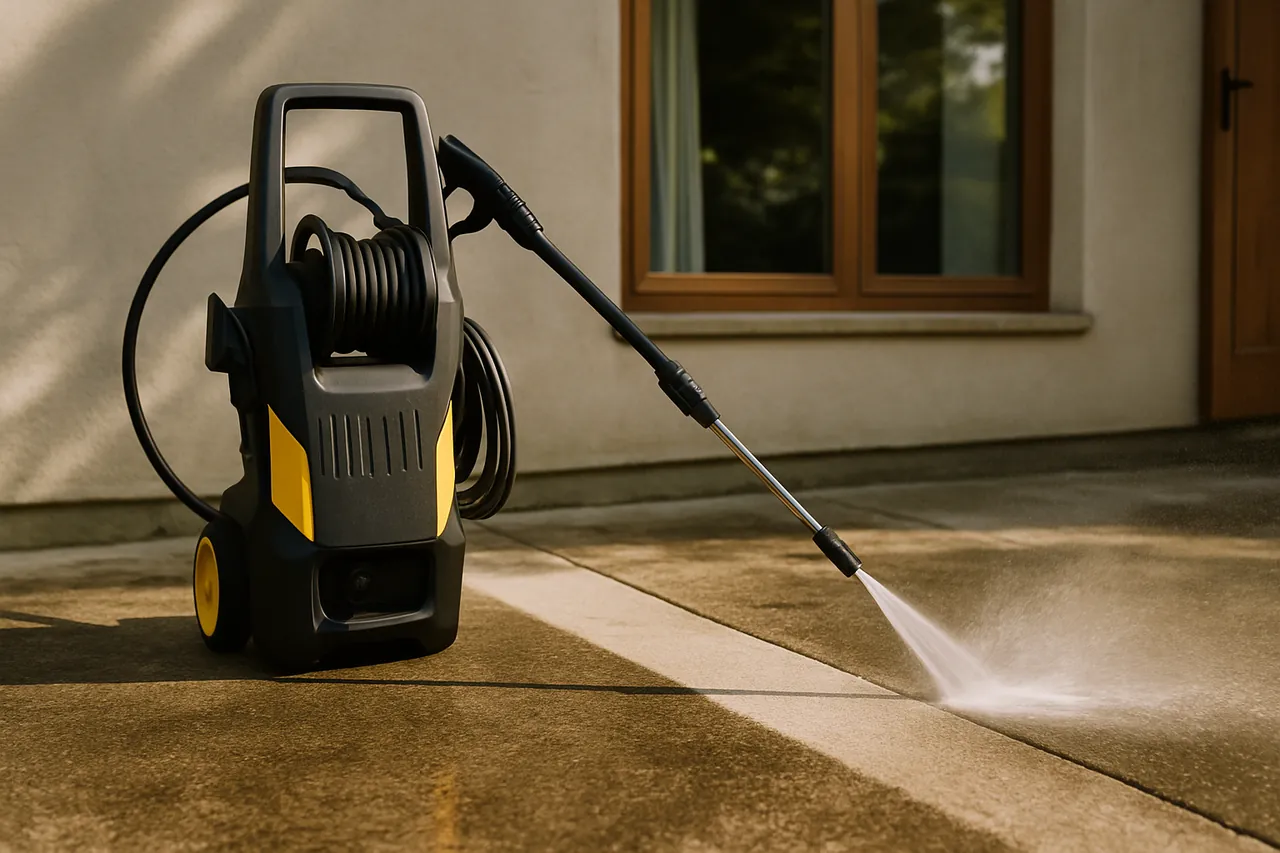
For driveways, decks, siding, patio furniture and cars, the SPX3000 covers what most homeowners actually need and costs little doing it. It's the one people buy first, keep for years, and rarely regret. The build is plasticky, but the cleaning isn't.
Power (PSI/GPM) & surfaces
Plenty for concrete, wood decking, vinyl siding and vehicles. Heavy industrial caked-on grime is where a gas unit pulls ahead.
Electric vs gas tradeoffs
Electric: quiet, low maintenance, tethered to an outlet and a hose. For typical suburban jobs that trade is firmly worth it.
Noise & portability
Far quieter than gas and light enough to carry one-handed. Cord management is the only real annoyance.
Maintenance & storage
Almost nothing — no oil, no fuel. Drain it and store it above freezing and it'll last.
Who should avoid it
Anyone cleaning large commercial areas or working far from power — that's gas territory.
 BEST ELECTRIC
Ryobi RY141820 Electric Pressure Washer
Best Electric pick
A step up in electric: consistent power, sturdier build, near-gas results without the noise.
add_circlePros
- checkStrong, consistent induction motor
- checkBetter build than budget electrics
- checkOn-board storage for accessories
- checkQuiet for the power
- checkLow maintenance
do_not_disturb_onCons
- closePricier than entry electrics
- closeStill outlet-tethered
- closeHeavier than the cheapest units
Real-world performance
This is where electric stops feeling like a compromise. The induction motor delivers consistent power that handles tougher driveway and siding jobs comfortably, and it does it without gas noise, fumes or upkeep. For most homeowners it's the sweet spot.
Power (PSI/GPM) & surfaces
Comfortable on concrete, brick, decking and siding; closes much of the gap to entry gas units.
Electric vs gas tradeoffs
Brushless electric gives you most of the grunt with none of the engine maintenance — a strong argument for skipping gas entirely.
Noise & portability
Quiet and manageable; sturdier and a little heavier than budget rivals.
Maintenance & storage
No oil or fuel; just winterise it. Genuinely low-fuss.
Who should avoid it
Buyers on the tightest budget, or anyone who truly needs cordless gas range and power.
 BEST GAS
Westinghouse WPX3100 Gas Pressure Washer
Best Gas pick
Real gas power for big jobs, without stepping into commercial pricing.
add_circlePros
- checkStrong, sustained cleaning power
- checkNo cord — go anywhere
- checkHandles caked grime electrics can't
- checkSolid frame and wheels
- checkGood value for a gas unit
do_not_disturb_onCons
- closeEngine maintenance (oil, fuel)
- closeLoud
- closeHeavy to move and store
Real-world performance
When the job is a stained concrete driveway, a mossy fence line or a property far from an outlet, gas earns its keep. The WPX3100 has the sustained power to strip what electrics only lighten, and the cordless freedom to roam a whole property.
Power (PSI/GPM) & surfaces
Strong on concrete, masonry, heavy mildew and stripping prep. Easy to damage soft wood or siding if you're careless — power demands respect.
Electric vs gas tradeoffs
You gain power and range; you accept noise, fumes and engine upkeep. For big or remote jobs that's a fair deal.
Noise & portability
Loud — hearing protection isn't a bad idea. Wheeled, but heavy.
Maintenance & storage
Oil changes, fuel stabiliser, off-season care. Treat it like a small engine, because it is one.
Who should avoid it
Apartment and small-yard owners — it's overkill, loud, and a storage burden there.
 BEST BUDGET ELECTRIC
Greenworks GPW1950 Electric Pressure Washer
Best Budget Electric pick
A tidy, low-cost electric for light, occasional cleaning around a small home.
add_circlePros
- checkVery affordable
- checkLight and compact
- checkQuiet
- checkSimple to set up and use
- checkFine for cars and patios
do_not_disturb_onCons
- closeModest power for tough grime
- closeBasic accessories
- closeNot for big or stained concrete
Real-world performance
For washing the car, rinsing patio furniture and freshening a small patio, the GPW1950 does the job at a price that's hard to argue with. Point it at a years-stained driveway and the limits show quickly — match the tool to light, routine work and it's a sensible buy.
Power (PSI/GPM) & surfaces
Comfortable on cars, furniture, windows and light patio grime. Heavy concrete staining is beyond it.
Electric vs gas tradeoffs
Pure electric simplicity; the trade is limited power, which is fine for its intended light duty.
Noise & portability
Quiet and easy to carry and stash — ideal for small spaces.
Maintenance & storage
Effectively none beyond winter draining.
Who should avoid it
Anyone with serious driveway, masonry or restoration jobs — underpowered for that.
 BEST HEAVY-DUTY GAS
Simpson MSH3125 MegaShot Gas Pressure Washer
Best Heavy-Duty Gas pick
A near-pro gas unit for demanding jobs and people who clean a lot.
add_circlePros
- checkSerious, sustained power
- checkHonda-class engine reliability
- checkSteel frame built to last
- checkPro-grade hose and fittings
- checkStrips what most units only lighten
do_not_disturb_onCons
- closeLoud and heavy
- closeFull engine maintenance
- closeMore machine than casual users need
Real-world performance
The MegaShot is for people who clean often and clean hard — paint prep, large stained driveways, equipment, fleet of outdoor surfaces. It has the durability and sustained output to do it repeatedly without complaint, which is where lighter units wear out.
Power (PSI/GPM) & surfaces
Strips concrete, masonry and prep surfaces with ease. That power will gouge wood or etch siding if mishandled — technique matters.
Electric vs gas tradeoffs
Maximum power and range at the cost of noise, fumes and real maintenance. For heavy or frequent use, worth it.
Noise & portability
Loud; wear ear protection. Heavy but well-built and wheeled.
Maintenance & storage
Treat the engine properly — oil, fuel care, off-season storage — and it's a long-term tool.
Who should avoid it
Occasional users with light jobs and limited storage — far more machine than needed.
 BEST PREMIUM ELECTRIC
Karcher K5 Premium Electric Pressure Washer
Best Premium Electric pick
The refined electric — water-cooled motor, smart storage, and a polished user experience.
add_circlePros
- checkDurable water-cooled induction motor
- checkExcellent build and ergonomics
- checkTidy integrated hose-reel and storage
- checkStrong, smooth power delivery
- checkQuiet for the performance
do_not_disturb_onCons
- closePremium price for an electric
- closeStill outlet-tethered
- closeHeavier than budget electrics
Real-world performance
Karcher's K5 is what an electric feels like when the maker stops cutting corners. The water-cooled motor is built for longer, harder sessions than typical electrics tolerate, and the whole machine — hose reel, storage, ergonomics — is simply nicer to use. It justifies its price through durability and refinement, not raw spec.
Power (PSI/GPM) & surfaces
Confident on driveways, decking, siding and vehicles; comfortably handles all but the heaviest restoration work.
Electric vs gas tradeoffs
It pushes electric about as far as it sensibly goes — most homeowners never need to cross into gas after this.
Noise & portability
Quiet for the output, with thoughtful storage that makes it easy to live with.
Maintenance & storage
Minimal upkeep; the integrated reel and storage are a genuine quality-of-life upgrade.
Who should avoid it
Budget buyers, and anyone who truly needs gas-level power and cordless range.
The bottom line
For most homeowners the Sun Joe SPX3000 is the right first pressure washer — it cleans what suburban life throws at it for very little money. Step to the Ryobi RY141820 or Karcher K5 if you want near-gas electric power without the upkeep, and to the Westinghouse or Simpson only if big, remote or relentless jobs genuinely demand gas. The real skill isn't buying the most powerful unit — it's matching pressure to surface so you clean the house instead of damaging it.
Frequently asked questions
Electric or gas pressure washer — which should I buy?
For typical suburban jobs — driveways, decks, siding, cars — a good electric is quieter, lower-maintenance and entirely sufficient. Choose gas only if you have large areas, heavily caked surfaces, or you're cleaning far from a power outlet. Most people don't need gas and buy it anyway.
How much PSI do I actually need?
Cars and furniture: lower pressure is safer. Decks and siding: moderate. Concrete and masonry stripping: high. More PSI isn't automatically better — excessive pressure damages wood and siding quickly, so match it to your softest common surface, not your toughest.
Can a pressure washer damage my house?
Easily, if misused. Too much pressure or the wrong nozzle gouges wood, etches siding, and forces water behind cladding. Start with a wider-angle nozzle at distance and move closer only as needed — technique protects your house more than any spec.
Are electric pressure washers powerful enough for a driveway?
A mid-range or better electric (like the Ryobi or Karcher K5) handles most residential driveways, especially with a surface cleaner attachment. Years of deep-set staining or large commercial slabs are where gas earns its place.
How much maintenance does a pressure washer need?
Electric: almost none beyond winterising. Gas: treat it like a small engine — oil, fuel stabiliser and off-season storage. Maintenance burden is a major reason to default to electric unless the jobs demand otherwise.
Do I need a surface cleaner attachment?
For driveways and patios, it's the upgrade most people underestimate — it cleans faster, more evenly and without the streaking a bare wand leaves. If flat hard surfaces are your main job, budget for one.
Are these worth it over hiring a professional?
For recurring needs, owning beats repeat hire within a season or two — and you can act the moment a mess happens rather than booking a slot. One-off heavy restoration is the case where a pro or a rental still makes sense.
Does a higher price mean a better clean?
Up to a point. Past mid-range, extra money mostly buys durability, refinement and convenience rather than dramatically better cleaning. Match the tier to how often you'll actually use it.
Keep reading
Common mistakes to avoid
- Buying on the headline number. Wattage, PSI and tank size look decisive on a spec sheet and rarely are. Match the tool to the job, not the biggest figure.
- Ignoring surface limits. Steam wrecks unsealed wood; too much pressure gouges siding; over-wetting carpet breeds odour. The most damage comes from the right tool used wrongly.
- Skipping maintenance. Descaling, tank rinsing and engine care are the difference between a multi-year tool and a one-season disappointment.
- One machine for every job. A spot cleaner is not a deep extractor; a steam mop is not a canister. Mismatched expectations cause most regret.
- Over-buying power. Most homes need less machine than they purchase — and pay for it in weight, noise and storage they never recover.
Sources & further reading
External links open in a new tab. We are not affiliated with these organisations; cited for independent reference.
Get our weekly tested picks
New lab-tested recommendations and deal alerts, straight to your inbox.