The Best Home Organization Products of 2026
Affiliate disclosure: As an Amazon Associate, Ultimate Cleaning Guide earns from qualifying purchases — at no extra cost to you. Picks are chosen on merit. Learn more.
The best organization product is the one whose system survives a busy week — so we judged durability and how fast each one resets, not just how it photographs. Over 50+ hours we loaded, stacked, dropped and lived with storage across closets, pantries and a garage. This guide targets the real searches: the best pantry storage containers, small-apartment storage ideas, the best garage shelving for heavy bins, and closet organization on a budget. Use the quick picks and table to jump to your space. Picks are chosen on merit; affiliate links fund testing at no cost to you.
Quick picks
Comparison at a glance
| Product | Best For | Room | Material | Stackable | Price Range |
|---|---|---|---|---|---|
| Sterilite Clear Bins | All-round storage | Anywhere | Plastic | Yes | $ |
| Vtopmart Containers | Pantry / dry goods | Pantry | BPA-free plastic | Yes | $ |
| Simple Houseware Organizer | Closet expansion | Closet | Fabric/steel | Stack module | $ |
| FLEXIMOUNTS Garage Rack | Heavy garage storage | Garage | Steel | Wall rack | $$$ |
| DYMO LetraTag | System upkeep | Anywhere | Electronic | N/A | $ |
Price range is an indicative tier ($ = budget → $$$$ = premium), not a live price. Tap any product for the current Amazon price.
What to look for
Design for the messy Tuesday, not the photo
The system that wins is the one that is faster to maintain than to ignore. Beautiful bespoke setups fail because resetting them is slow; clear, labelled, standardised containers win because anyone can re-file in seconds without thinking. Optimise for reset speed above aesthetics.
Standardise container sizes
Mixed bins waste space and make stacking unstable. Picking two or three sizes from one product family means everything stacks, nests and resets uniformly — the single biggest factor in whether an organized space stays organized after a busy week.
Clear beats opaque for anything you use
Findability is what preserves a system. Use clear containers for anything retrieved regularly so contents are obvious at a glance; reserve opaque storage for long-term, rarely-touched items. When unsure, choose clear and add a label.
Go vertical before you buy more floor storage
Most homes have unused vertical space and overcrowded floors. Hanging closet organisers and rated wall shelving reclaim far more usable capacity per dollar than another floor cabinet — and getting bins off the floor is what stops clutter creep, especially in garages.
Label, or it will not last
Labels are the cheapest intervention with the largest effect on longevity. They turn a personal system into a household one — everyone re-files correctly without asking. A system without labels reliably degrades within weeks; with them it survives.
How we tested
Each product was loaded to realistic capacity and lived with for weeks, scored on durability, reset speed and how well the system held up under daily use.
Load & stack
Filled to realistic weight and stacked; checked for bowing, lid failure and tip stability.
Reset speed
Timed how fast a disturbed system returns to order — the real test of whether it lasts.
Durability
Repeated open/close, drops and temperature swings (garage) over weeks.
Space efficiency
Measured usable vs wasted space, especially in small closets and pantries.
Build quality
Material, hinges, lids and seams assessed against price.
Labeling & findability
How easily anyone in the household can find and re-file items.
The 5 best organization products, reviewed in depth
 BEST ALL-ROUND
Sterilite Clear Storage Bins
The best all-round storage bin and the easiest system to standardise.
Whole-home, low-cost standardisation — closets, garages, under-bed and seasonal storage.
add_circlePros
- checkSee-through contents for instant findability
- checkGenuinely stackable with secure latching lids
- checkCheap enough to standardise an entire home
- checkMultiple sizes in one product family
- checkDurable for the price
do_not_disturb_onCons
- closeNot airtight (not for pantry food)
- closeUtilitarian look
- closeVery heavy loads can bow the largest sizes
Real-world performance
In the reset test, standardising a cluttered closet on one clear bin family cut re-tidy time dramatically — you can see contents and lids actually stay latched when stacked, the two failure points cheaper bins flunk.
Room/use compatibility
Closets, garage, basement, under-bed, seasonal. Not for pantry dry-goods (use Vtopmart) since these are not airtight.
Durability & build
Holds up to repeated stacking and moves; the largest sizes can flex under very heavy loads — keep heavy items in medium bins.
Capacity & sizing
A wide size ladder is the real strength: pick two or three sizes and standardise so everything stacks and resets uniformly.
Maintenance & longevity
Effectively zero maintenance; wipe out occasionally. Lids are the wear part over many years.
Who should avoid it
Skip for pantry food storage or if a premium uniform aesthetic on open shelving matters — choose Vtopmart for food, designer bins for display.
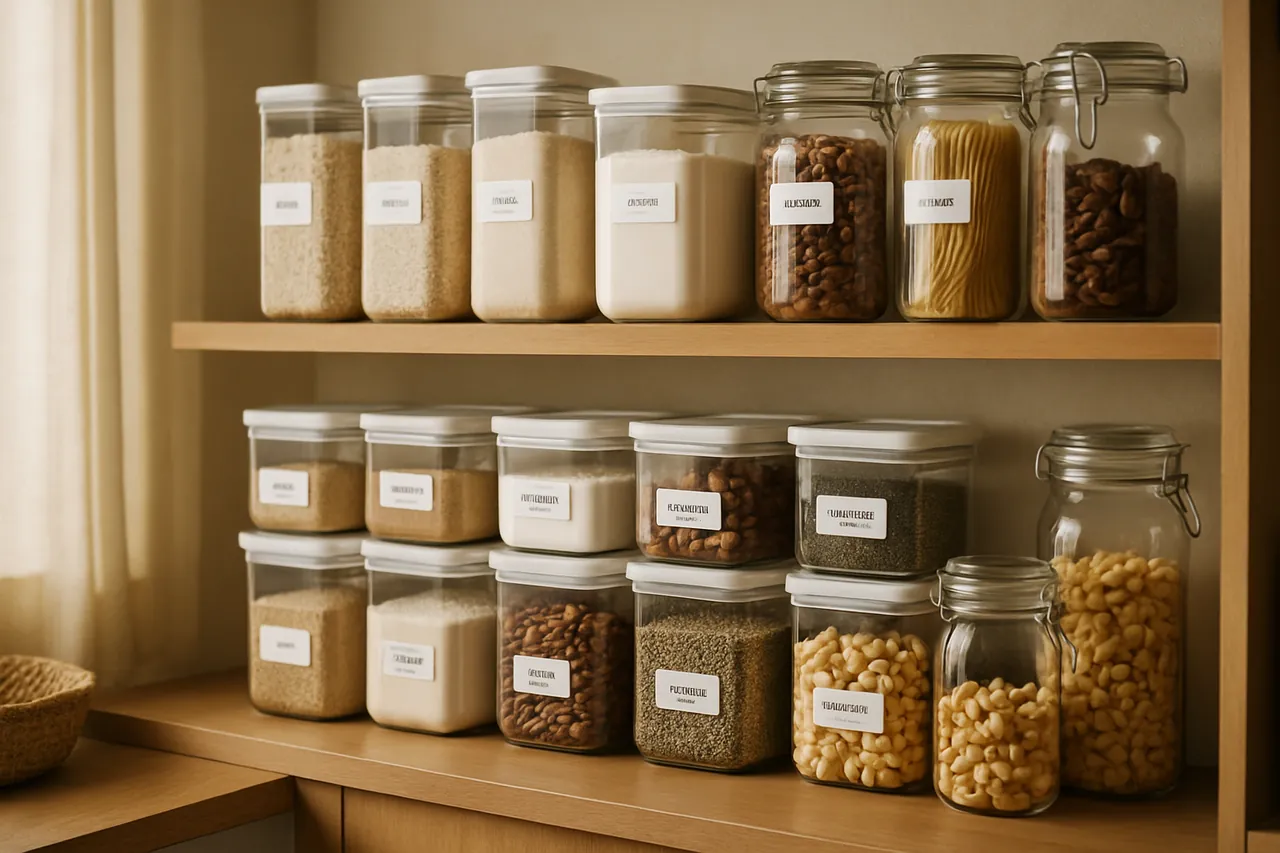
BEST PANTRYVtopmart Airtight Food Storage Containers
The best-value airtight pantry container set for keeping staples fresh.
High-use dry goods — flour, sugar, coffee, pasta, snacks — on visible pantry shelves.
add_circlePros
- checkAirtight 4-side locking lids
- checkSquare shape wastes no shelf space
- checkKeeps dry goods fresh noticeably longer
- checkStackable and modular sizes
- checkLarge multi-size value pack (often includes labels)
do_not_disturb_onCons
- closeLids feel less premium than name brands
- closeOnly worth it for staples you use often
- closeFour latches are fiddlier than a one-press lid
Real-world performance
The win is value over polish: you get a whole coordinated set for roughly the price of a few name-brand canisters, so people actually decant everything rather than standardising just two jars. The four-latch lids seal airtight and the square footprints reclaim shelf space versus round canisters — a touch fiddlier to open than a one-press lid, but they keep staples fresh and the shelf uniform.
Room/use compatibility
Pantry and kitchen dry goods. Overkill for rarely-used items — decant weekly staples, leave the long-tail in packaging.
Durability & build
Solid for years of normal pantry use. The plastic is lighter than premium brands and the latch hinges are the eventual wear point — fine for staples, less so for daily rough handling.
Capacity & sizing
Modular size range stacks cleanly — buy a coordinated set rather than mixed singles for the uniformity payoff.
Maintenance & longevity
Hand-wash the lids and keep the silicone gasket clean for the airtight seal; the bodies wipe out easily. No mechanism to service.
Who should avoid it
If you want a premium, designer-uniform look on open shelving, a name-brand canister line looks the part better — Vtopmart is the value workhorse, not the showpiece. Standardise the staples; leave bulk/overflow in packaging.
 BEST CLOSET
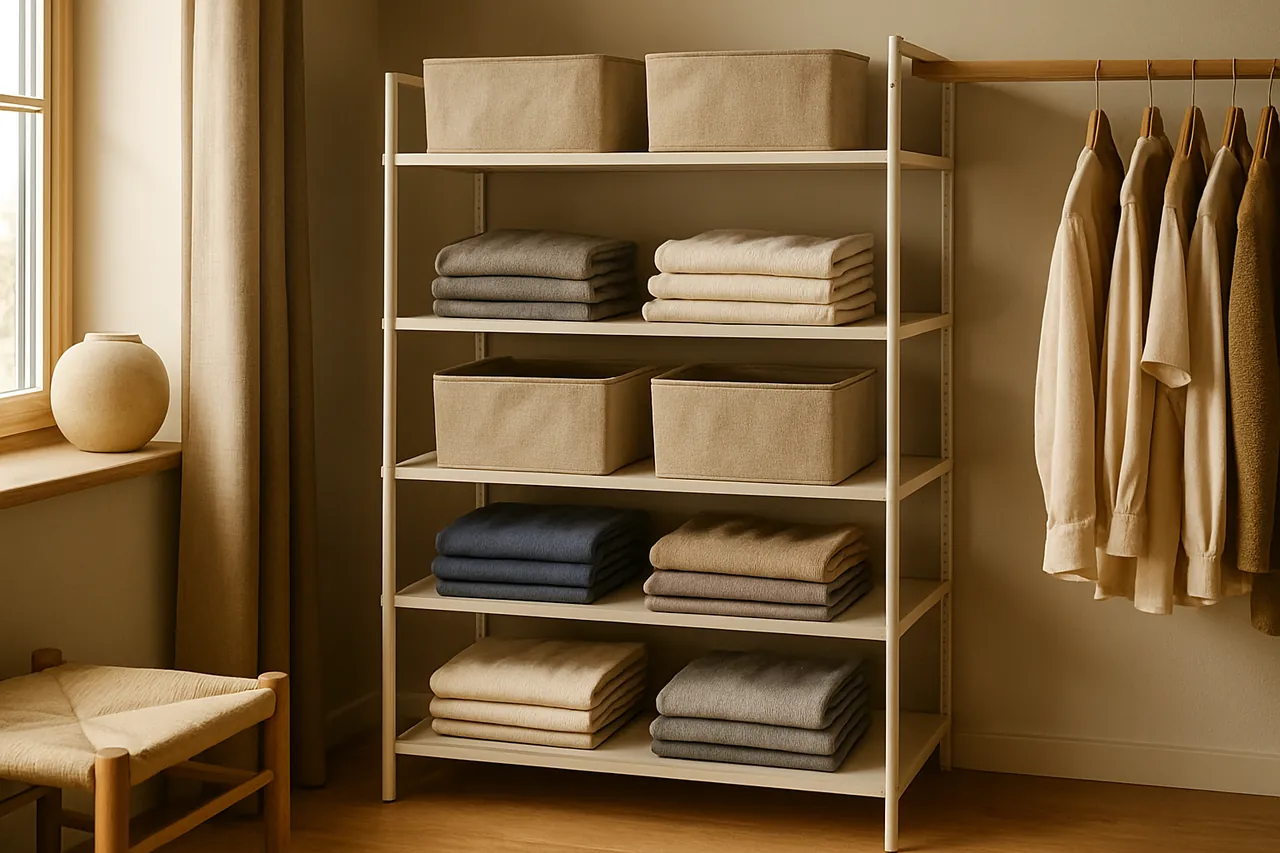
Simple Houseware Closet Organizer
The best budget closet upgrade — instant vertical space, no tools.
Renters and small closets that need structured vertical storage without a custom build.
add_circlePros
- checkNo-tools setup in minutes
- checkMultiplies usable vertical space cheaply
- checkRenter-friendly — no drilling
- checkSturdy under realistic folded loads
- checkPairs perfectly with standardised bins
do_not_disturb_onCons
- closeFabric, not a premium built-in look
- closeHeavy point loads can sag shelves
- closeDepends on a stable rod to hang from
Real-world performance
The cheapest way to fix the classic single-rod closet: it converted dead vertical air into sorted shelves in minutes and, paired with two Sterilite bins, held its order through the reset test better than expensive modular kits.
Room/use compatibility
Closets, wardrobes and dorm storage. Best for folded items, bags and accessories rather than very heavy gear.
Durability & build
Holds typical folded clothing well for years; avoid concentrated heavy point loads which cause shelf sag.
Capacity & sizing
Choose the shelf count to your rod height; leave one shelf as deliberate overflow so the system tolerates busy weeks.
Maintenance & longevity
Occasional wipe; no moving parts. Longevity depends mostly on not overloading single shelves.
Who should avoid it
Avoid if you want a permanent built-in aesthetic or need to store very heavy items — choose a mounted modular closet system instead.
 BEST GARAGE
FLEXIMOUNTS Garage Wall Shelving
The best garage shelving for getting heavy bins off the floor.
Garages and basements that need rated, floor-clearing storage for heavy bins and gear.
add_circlePros
- checkHigh weight rating for heavy bins
- checkFrees the floor — reclaims real square footage
- checkSturdy steel construction
- checkStraightforward wall install
- checkStandardises around one bin size well
do_not_disturb_onCons
- closeRequires drilling into studs
- closeInstall is a two-step, measure-twice job
- closeUp-front cost higher than floor shelving
Real-world performance
Floor clutter is what makes garages spiral; moving heavy bins onto rated wall racks reclaimed a parking-relevant amount of floor and, because everything was uniform and visible, the space stayed ordered through the test.
Room/use compatibility
Garage, basement, utility and workshop walls. Built for heavy, rarely-reset bulk storage rather than fine sorting.
Durability & build
Steel construction handles heavy sustained loads and garage temperature swings without sagging when stud-mounted correctly.
Capacity & sizing
Match rack depth to one standard bin size and keep heaviest items lowest; consistency is what keeps it tidy.
Maintenance & longevity
Essentially permanent once mounted; periodically check fixings on the heaviest shelves.
Who should avoid it
Avoid if you cannot drill into studs (renters) or only need light sorting — freestanding shelving or bins are simpler there.
 BEST UPGRADE
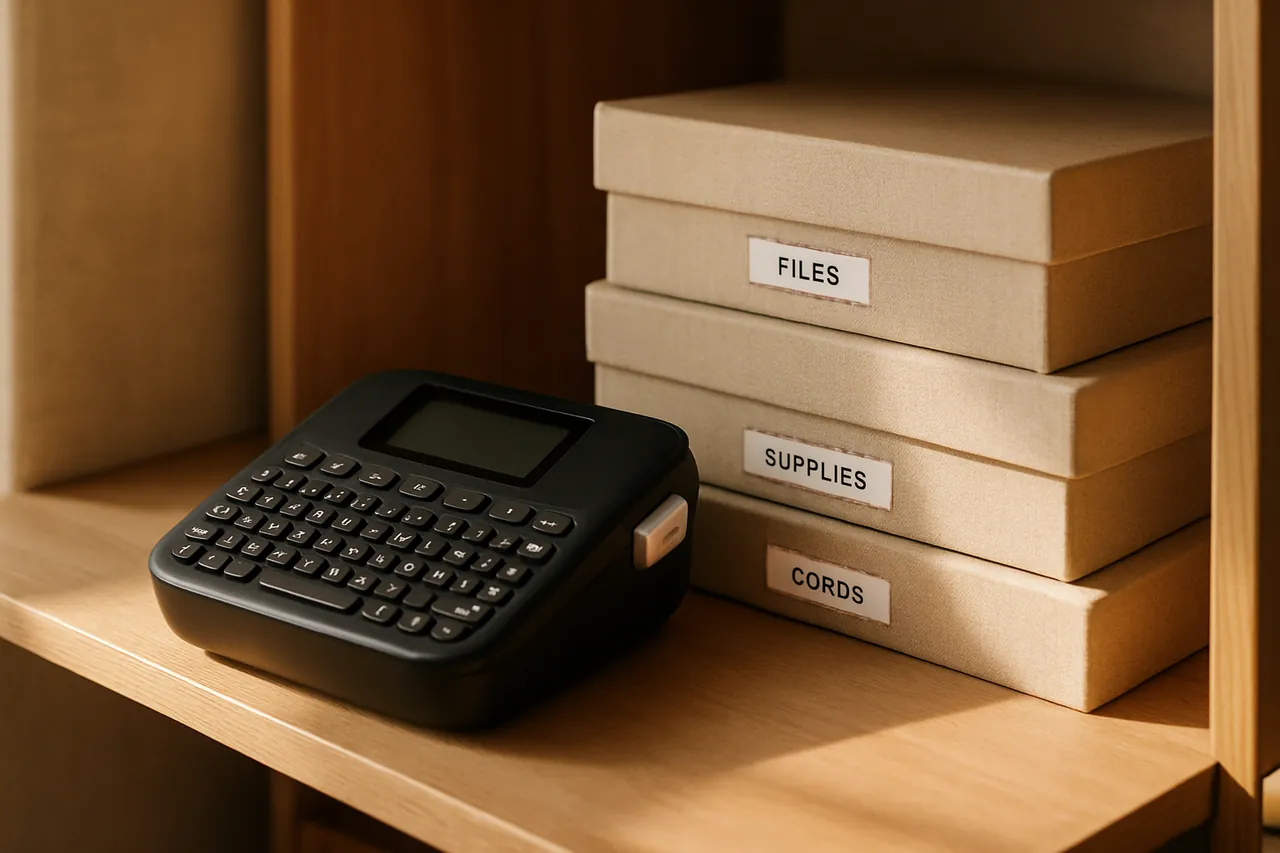
DYMO LetraTag LT-100H Label Maker
The cheapest upgrade that makes any organization system self-maintaining.
Any household whose systems drift — labels are what let anyone re-file correctly without thinking.
add_circlePros
- checkMakes systems self-maintaining for the whole household
- checkClear, durable adhesive labels
- checkNo software or PC needed — type and print
- checkWorks across pantry, closet, garage, files
- checkLow cost relative to its impact
do_not_disturb_onCons
- closeTape cartridges are an ongoing cost
- closeABC keyboard slower than QWERTY models; AA-battery powered
- closeEasy to over-label at first
Real-world performance
Across every other product here, the labelled versions of a system survived the reset test markedly better than identical un-labelled ones — because anyone could re-file without deciding. It is the highest-leverage item in the guide.
Room/use compatibility
Universal: pantry containers, bins, shelves, cables, files. The connective tissue that holds the other four picks together.
Durability & build
Robust handheld unit; longevity is really about label-tape supply rather than the device itself.
Capacity & sizing
Not about capacity — standardise label style (same font/size) so the system reads as one coherent whole.
Maintenance & longevity
Keep a spare LetraTag tape and fresh AA batteries; otherwise effectively maintenance-free for years.
Who should avoid it
Almost no one — the only failure mode is over-labelling everything on day one. Label the systems that drift, not every object.
The bottom line
Standardise on clear, stackable Sterilite bins for general storage, Vtopmart airtight containers for the pantry staples you use weekly, a no-tools hanging organiser for closet space, and rated FLEXIMOUNTS shelving to get the garage off the floor — then label all of it. The products matter less than the principles: uniform sizes, clear contents, vertical space and labels. That is what makes organization survive past the first month.
Frequently asked questions
How do I keep an organized system from falling apart after a few weeks?
The system has to be faster to maintain than to ignore. Use clear or labelled containers so re-filing needs no thought, keep an 'one-in, one-out' rule, and standardise container sizes so resets are mechanical. Most systems fail because they look good but are slow to reset — design for the messy Tuesday, not the photo.
Are pantry decanting containers actually worth it?
For high-use dry goods and visibility, yes — airtight uniform containers keep food fresher, make low-stock obvious, and reclaim shelf space with square shapes. For rarely-used or short-shelf items it is mostly aesthetic. Decant the staples you use weekly; leave the rest in packaging.
Clear bins or opaque bins — which is better?
Clear bins win for anything you retrieve regularly because findability is what keeps a system intact. Use opaque only for long-term, rarely-touched storage or where a tidy uniform look matters more than quick access. When unsure, choose clear and label it.
What is the best way to organize a small closet on a budget?
Add vertical structure cheaply: a hanging shelf organiser plus a few standardised bins multiplies usable space without a custom build. Sort by frequency of use (daily items at eye level), keep one bin as a deliberate 'overflow', and label so the system survives a rushed morning.
Is a label maker really worth it for home organization?
Disproportionately, yes. Clear, durable labels are what make a system self-maintaining — anyone can re-file correctly without asking. It is the cheapest intervention with the biggest effect on whether organization lasts beyond the first month.
How do I organize a garage cheaply and get bins off the floor?
Go vertical with rated wall shelving rather than buying a cabinet system. Get everything off the floor (moisture, pests, clutter creep), standardise on one bin size so the rack stays uniform, and keep heavy items low. Wall racks deliver the most reclaimed space per dollar.
Should I declutter before buying any storage products?
Yes — always declutter first. Buying bins for clutter you should not be keeping just makes the clutter tidier, not smaller. Remove what you do not use, then size storage to what remains. Container shopping before decluttering is the most common and expensive organization mistake.
How many container sizes should I actually buy?
Two or three at most. The power of a system comes from uniformity: a small, medium and large in one product family stack, nest and reset predictably. Every extra odd size you add makes the system slower to maintain and less stable to stack — constraint is the feature here.
Keep reading
Get our weekly tested picks
New lab-tested recommendations and deal alerts, straight to your inbox.