How Long Do Cordless Vacuum Batteries Last?
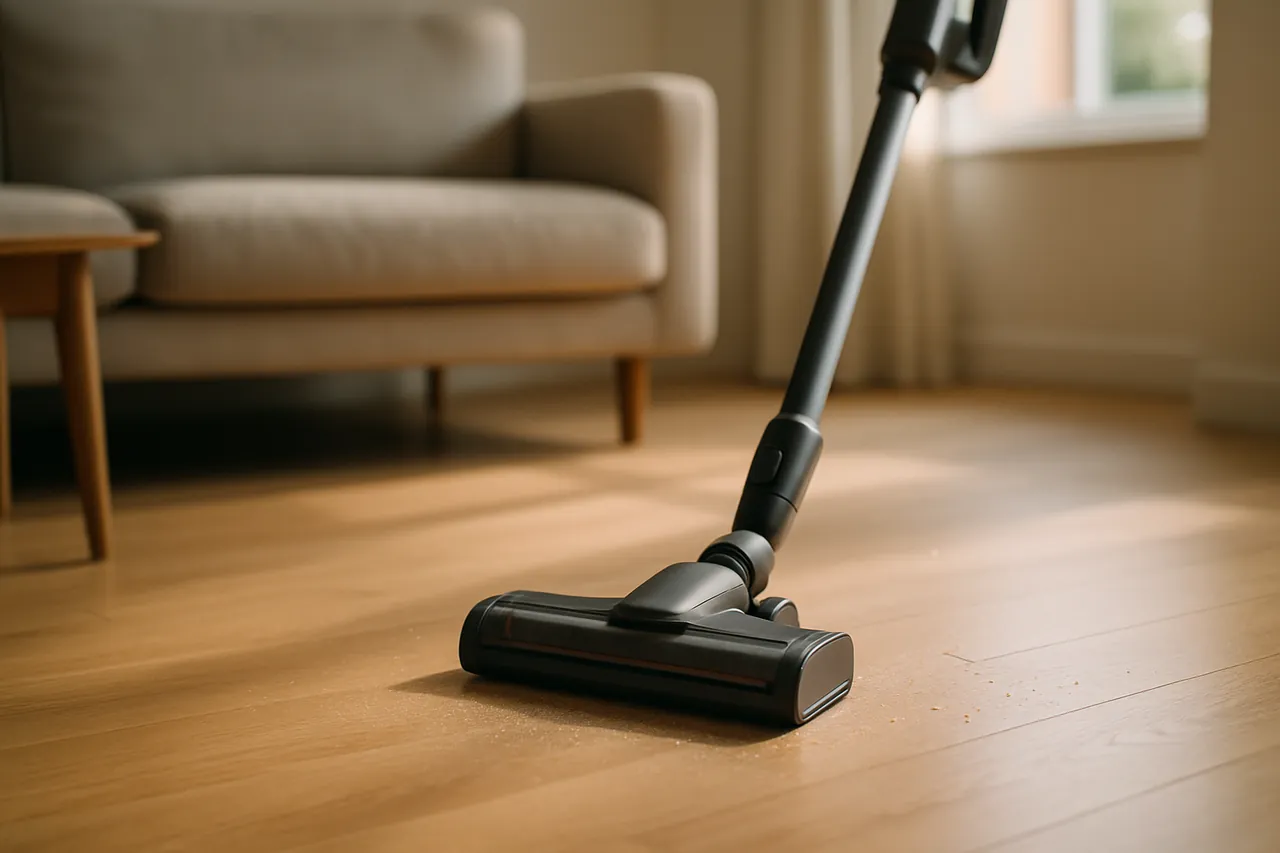
Two different questions hide inside this one: how long the battery runs per charge, and how many years it lasts before it won't hold one. The honest answers are 'less than the box says' and 'three to five years' — but both are largely in your control.
Runtime per charge: ignore the headline number
Manufacturers quote runtime on the lowest power setting with a non-powered tool attached. Nobody cleans like that. On the powered floor head you'll actually use, expect roughly 30–60 minutes from a flagship and as little as 8–12 minutes on max/boost.
This is why removable batteries matter more than most buyers expect. For anything larger than an apartment, a charged spare turns a runtime ceiling into a non-issue — see our picks for cordless vacuums with replaceable batteries.
Lifespan in years: three to five, realistically
Lithium-ion packs degrade with charge cycles and heat. Most cordless vacuum batteries hold strong for about 3–5 years before runtime noticeably shortens, sooner if abused, longer if looked after. The vacuum itself usually outlives its first battery — which is the whole argument for buying one you can re-battery.
What shortens battery life
- Living permanently on the charger at 100% in a hot garage
- Running flat to zero repeatedly, then leaving it dead
- Heavy max-mode use as the default rather than the exception
- A clogged filter forcing the motor — and battery — to work harder (more on that in our cordless vacuum maintenance guide)
Signs the battery, not the vacuum, is failing
Runtime collapsing to a fraction of what it was, the vacuum cutting out under load, or it running only while on the charger — those point to the pack, not the motor. Before blaming the battery, rule out a clogged filter or blockage, which mimics the same symptoms.
When and how to replace it
On a model with a click-in battery, replacement is a sub-five-minute job and far cheaper than a new vacuum — the single biggest reason to favour serviceable designs. Recycle the old pack properly; lithium batteries don't belong in household waste.
Removable vs sealed batteries: the decision that ages best
This is the spec that quietly determines whether you own the vacuum for four years or eight. A click-in pack means that when capacity fades — and it will — you spend a fraction of a new machine and carry on. A sealed-in battery means the day the cell tires, the whole vacuum is effectively disposable, however good the motor still is. It rarely makes a product listing's headline, and it should. Treat battery serviceability as part of the purchase price, not a footnote.
The bottom line
Expect 30–60 usable minutes per charge and 3–5 years before the pack noticeably weakens. Keep it cool, avoid living on the charger at full, and don't default to max mode. Most importantly, buy a model you can re-battery — it's the single change that turns battery anxiety into a non-issue.
Frequently asked questions
How many years does a cordless vacuum battery last?
Typically 3–5 years of regular use before runtime noticeably drops. Heat, constant 100% charging and frequent full discharges shorten it; moderate use and a cool storage spot extend it.
Why is my cordless vacuum battery draining so fast?
Usually max-mode overuse or a clogged filter making the motor work harder — not always a dead battery. Clean the filter and brush bar first; if runtime is still a fraction of new, the pack is degrading.
Can I replace a cordless vacuum battery myself?
On models with a click-in/removable battery, yes — minutes, no tools, much cheaper than a new vacuum. Glued-in batteries are the reason serviceable designs are worth paying for.
Should I leave my cordless vacuum on the charger all the time?
Most modern units tolerate it, but constant 100% in a hot space accelerates ageing. Cool, partial-charge storage is gentler on the pack over years.
Related guides
Get our weekly tested picks
Practical maintenance tips and lab-tested recommendations, straight to your inbox.