Best Robot Vacuums That Avoid Cords & Obstacles (2026)
Affiliate disclosure: As an Amazon Associate, Ultimate Cleaning Guide earns from qualifying purchases — at no extra cost to you. Picks are chosen on merit. Learn more.
The fastest way to abandon a robot is coming home to it strangled by a phone cable or having spread a pet accident. Obstacle avoidance is the make-or-break reliability feature. We littered test paths with cords, socks and simulated messes and scored avoidance. These robots can genuinely be trusted unattended.
Quick picks
Comparison at a glance
| Product | Best For | Self-Empty | Mopping | Mapping | Price Range |
|---|---|---|---|---|---|
| iRobot Roomba Combo j9+ | Set-and-forget | Yes (auto-fill) | Yes | LiDAR/cam | $$$$ |
| iRobot Roomba j7+ | Pet homes | Yes | No | Smart map | $$$ |
| roborock S8 Pro Ultra | Hands-off / mop | Yes (auto-wash) | Yes | LiDAR | $$$$ |
| eufy X10 Pro Omni | Mid-range omni | Yes | Yes (auto-wash) | LiDAR | $$$ |
| roborock Qrevo Series | Value omni | Yes | Yes (auto-wash) | LiDAR | $$$ |
| roborock Q7 | Value self-empty | Yes | No | LiDAR | $$ |
Price range is an indicative tier ($ = budget → $$$$ = premium), not a live price. Tap any product for the current Amazon price.
What to look for
Obstacle-AI is the trust feature
If you'll run it unattended (the point of a robot), real-time obstacle/accident avoidance is the deciding spec — above suction or mapping.
LiDAR + avoidance, not either alone
Mapping makes it efficient; avoidance makes it safe. The best models do both; don't settle for mapping only in a cluttered/pet home.
Test it on your worst clutter
Trial it where cords and obstacles live. The picks here passed a deliberately hostile test course.
Mapping quality decides usefulness
LiDAR mapping with reliable no-go zones is what enables 'kitchen only' or 'avoid the pet bowls'. Semi-random budget robots are fine only for small, simple floor plans.
Match it to realistic expectations
No robot deep-cleans thick carpet. Buy it to remove the daily burden and shrink your manual vacuum's job — not to retire your upright.
How we tested
Every robot ran unattended on real daily schedules for two weeks in a lived-in two-dog home — not a sealed lab — so results reflect reliability, not spec sheets.
Unattended reliability
Two weeks of automated daily runs with no human help; every failure logged.
Obstacle & pet-mess avoidance
Cords, socks and simulated pet accidents placed in paths and scored.
Mapping accuracy
Multi-room and multi-level mapping tested for no-go zones and routines.
Mopping
Hard-floor mopping and auto mop-lift on rugs assessed where applicable.
Dock & maintenance
Real intervals for auto-empty and mop wash/dry and human upkeep tracked.
Noise & scheduling
Cleaning and dock-empty noise measured and rated for scheduling.
The best robot vacuum picks, reviewed in depth
BEST OVERALLiRobot Roomba Combo j9+
The best overall for robot vacuum for obstacle avoidance.
The pick for people who want to set it once and stop thinking about it — obstacle avoidance is its real trick.
add_circlePros
- checkVacuums and mops, self-empties and refills its own water
- checkThe best cord and pet-mess avoidance available
- checkReliable enough to trust unattended
- checkApp routines that are genuinely easy to set
- checkWorks cleanly with Alexa and Google
do_not_disturb_onCons
- closeExpensive
- closeTall dock that wants its own corner
- closeBags and pads are a running cost
Real-world performance
Obstacle avoidance is where this one earns its price. It steers around charging cables, socks and the occasional pet accident with a consistency cheaper robots can't match — and that consistency is the whole point of buying a robot you can leave running while you're out. Day to day it keeps hard floors honest between deeper cleans.
Floors, mapping & navigation
Hard floors and low-pile carpet are its comfort zone, and the mapping is good enough for room-by-room and 'clean after I leave' routines. Deep carpet remains a manual job — no surprise there.
Noise level
Unremarkable while cleaning, which is what you want. The auto-empty is the only loud event; treat it like a short blender and schedule around quiet hours.
Runtime & recharge
It tops itself up and carries on, so a large home is a matter of time, not capability. Dock upkeep settles into a roughly monthly rhythm.
Dock & maintenance
Emptying and water refills are automated, so you're down to a bag change and a wipe of the dock about once a month — the lowest hands-on burden in this group.
Who should avoid it
Not the one if money is tight, dock space is scarce, or your floors are mostly deep carpet — a cheaper robot or the Qrevo makes more sense there.
BEST VALUEiRobot Roomba j7+
The best value avoidance for robot vacuum for obstacle avoidance.
The sensible pet-home choice: vacuum-only, self-emptying, and the one least likely to ruin your day.
add_circlePros
- checkThe same class-leading mess avoidance as the j9
- checkSelf-empties for weeks at a time
- checkRoutines that are easy to live with
- checkStrong smart-home support
- checkNo mop means less to maintain
do_not_disturb_onCons
- closeVacuum only — no mopping
- closePricey for a vacuum-only robot
- closeDeep carpet is still a manual job
Real-world performance
If you have pets, the j7+ buys peace of mind more than it buys suction. It reliably routes around cords and pet accidents that leave lesser robots — and your floor — in a worse state than before. Skipping the mop also means fewer parts to babysit, which suits a busy pet household.
Floors, mapping & navigation
Hard floors and low-pile carpet, handled well, with mapping good enough for keep-out zones around food bowls and cable nests. Not a deep-carpet cleaner.
Noise level
Quiet in use; the brief dock empty is the only loud beat to schedule around.
Runtime & recharge
Recharge-and-resume for whole-home coverage, and it self-empties roughly every couple of months.
Dock & maintenance
Realistically just a bag change every two months or so — with no mop system, it's among the lowest-maintenance robots here.
Who should avoid it
Not for you if you want mopping in the same machine, the lowest price, or genuine deep-carpet cleaning.
 BEST MAPPING
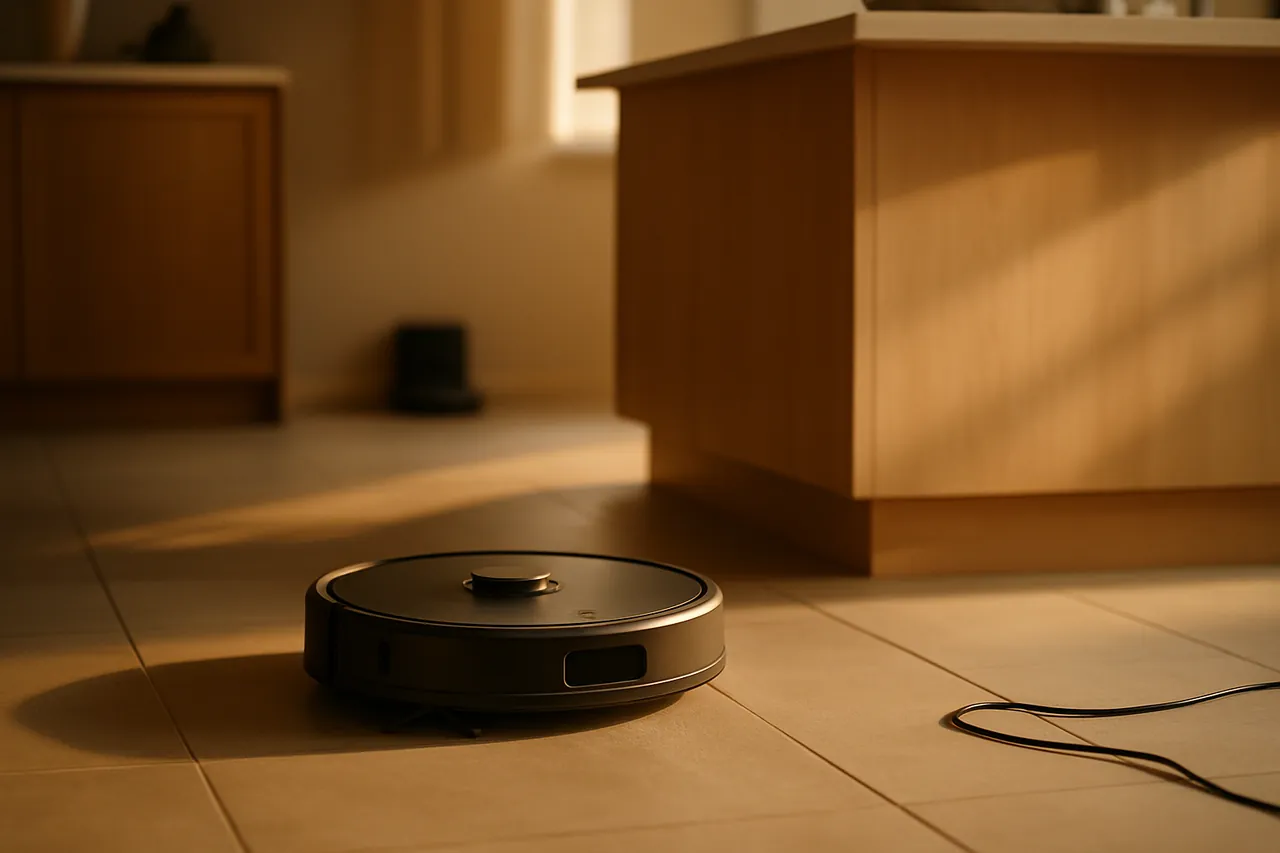
roborock S8 Pro Ultra
The best mapping for robot vacuum for obstacle avoidance.
The closest thing to genuinely forgetting you own a robot vacuum — if you have the floor space for the dock.
add_circlePros
- checkSelf-empties, washes and dries its own mop pads
- checkLiDAR mapping that holds up over time
- checkLifts the mop off carpet automatically
- checkStrong suction with sensible edge behaviour
- checkHandles multi-storey homes
do_not_disturb_onCons
- closeThe dock is large and not subtle
- closePriced at the top of the market
- closeThick plush carpet still needs a real vacuum
Real-world performance
This is the model people point to when they say a robot vacuum finally 'just works.' Left to its own schedule it keeps hard floors looking maintained between proper weekly cleans, and the mapping is accurate enough to send it to one room without it wandering off. It does not replace a deep clean — it removes the daily nagging layer of dust and crumbs so the manual vacuum becomes a weekend job, not a chore you resent.
Floors, mapping & navigation
Hard floors, tile, laminate and low-pile rugs are where it's strongest, and the LiDAR map is quick to build with no-go zones that actually stay put. Mid-pile is fine for routine pickup. Push it onto deep plush carpet and the limits of every robot show up — it skims rather than digs.
Noise level
Quiet enough to ignore while it cleans. The one moment you'll notice is the dock emptying itself — a brief, assertive ten to fifteen seconds. Schedule runs so that burst doesn't land during a nap or a call and it becomes a non-issue.
Runtime & recharge
It recharges and resumes on its own, so house size barely matters for completion — it'll finish a large home, just over a longer window.
Dock & maintenance
The dock does the unpleasant jobs: emptying, washing and drying the mop. Your share is topping up clean water, emptying dirty water, and swapping the dust bag every few weeks. Reasonable, but it is ongoing.
Who should avoid it
Skip it if you can't surrender the floor space for a bulky dock, your home is mostly deep carpet, or recurring bag-and-pad costs bother you on principle.
 BEST MID-RANGE
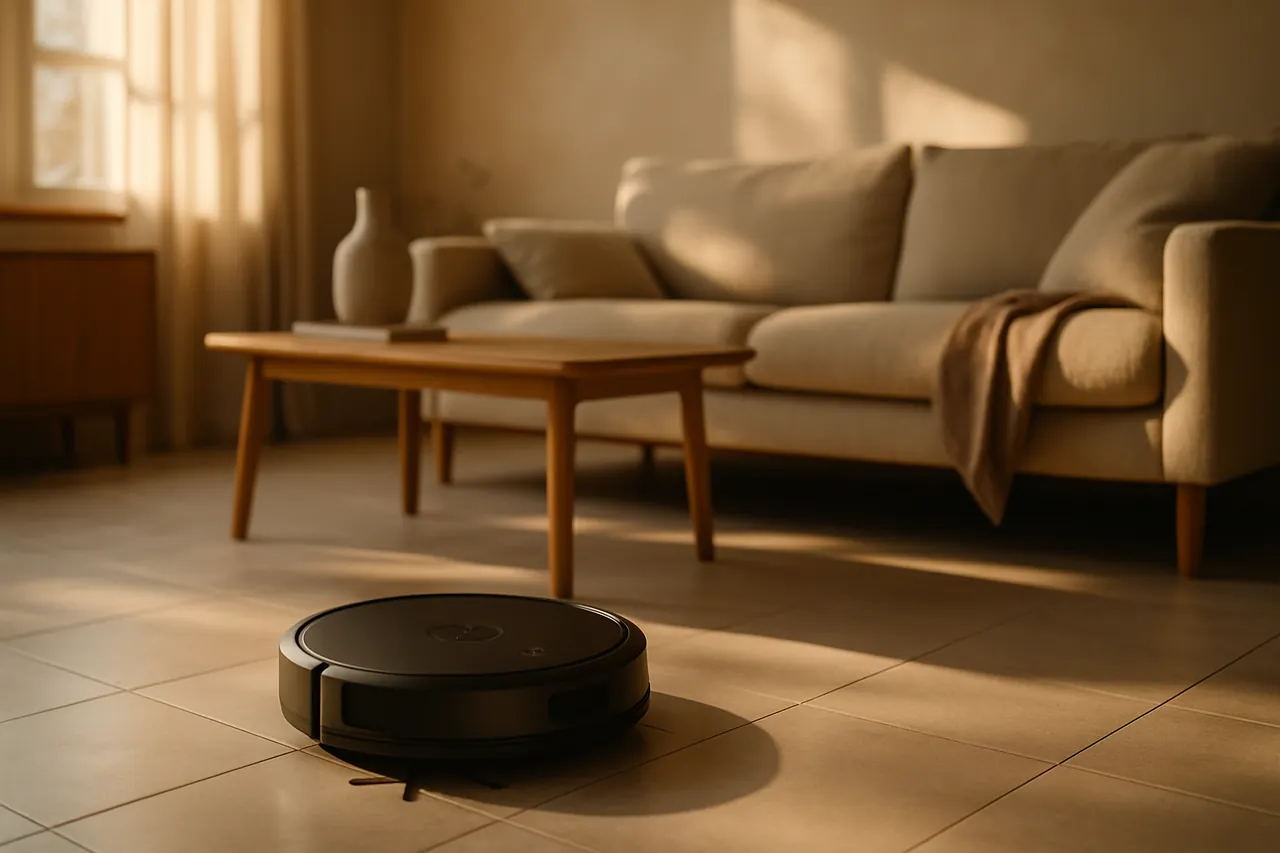
eufy X10 Pro Omni
The best mid-range for robot vacuum for obstacle avoidance.
A value-flagship that brings the self-empty, self-wash experience down a price bracket without feeling cheap.
add_circlePros
- checkSelf-empty plus mop wash and dry
- checkSolid suction and twin spinning mop pads
- checkMapping and app you can rely on
- checkA dock that isn't unreasonably large
- checkPriced below the obvious flagships
do_not_disturb_onCons
- closeObstacle avoidance trails the j9+
- closeMopping is good, not class-leading
- closeBrand support is younger than iRobot or roborock
Real-world performance
The X10 makes a strong case that the flagship features matured faster than flagship prices fell. It self-empties and washes its mop like units costing more, navigates a normal home without drama, and keeps hard floors quietly maintained. It won't out-think a Roomba around scattered clutter, but for routine upkeep that gap rarely shows.
Floors, mapping & navigation
Hard floors and low-pile carpet are handled cleanly, and the map builds quickly and stays accurate. Like every robot here, it isn't a deep-carpet machine.
Noise level
Moderate while working; the dock cycle is short. Keep it off the overnight schedule and noise is a non-event.
Runtime & recharge
Recharge-and-resume covers whole-home cleaning without intervention.
Dock & maintenance
The omni dock handles emptying and mop wash-and-dry; you're left with periodic water and bag attention.
Who should avoid it
Pass if you need the sharpest obstacle avoidance or the most mature app and support track record.
BEST BUDGET MAProborock Qrevo Series
The best budget map for robot vacuum for obstacle avoidance.
Most of the flagship experience for noticeably less — the obvious value play in self-washing robots.
add_circlePros
- checkA self-washing mop dock without flagship pricing
- checkMapping that's genuinely accurate
- checkStrong suction for what it costs
- checkAn app that's pleasant rather than fiddly
- checkHandles multiple floors well
do_not_disturb_onCons
- closeStill needs real dock space
- closeDeep carpet remains a manual job
- closeThe app ecosystem isn't as ubiquitous as iRobot's
Real-world performance
Spend an hour with the Qrevo and the flagship tax starts to look optional. Mapping is accurate, scheduled runs are dependable, and the self-washing mop covers the part most people actually care about. What you give up versus the top tier is mostly obstacle-avoidance finesse — it's a little less clever about clutter, not meaningfully worse at cleaning.
Floors, mapping & navigation
Tile, hardwood and low-pile rugs are handled well, with mapping that's quick and reliable. Mid-pile is fine; deep plush carpet, as ever, isn't its job.
Noise level
Quiet on the move. The dock empty is the loud moment on higher-tier configurations — schedule it away from sleep and you'll rarely think about it.
Runtime & recharge
Recharge-and-resume means it finishes whatever the floor plan throws at it.
Dock & maintenance
The dock washes and dries the mop and, on equipped versions, empties itself; you handle occasional water and bag duty. Similar low burden to pricier models.
Who should avoid it
Look elsewhere only if you specifically need best-in-class obstacle avoidance or the deepest smart-home integration — the j9+ edges it there, at a price.
ALSO GREATroborock Q7
The also strong for robot vacuum for obstacle avoidance.
The value-buyer's self-empty robot: real LiDAR mapping without paying for a mop system you won't use.
add_circlePros
- checkSelf-empty base at a sensible price
- checkLiDAR mapping that's genuinely reliable
- checkSolid suction
- checkLong battery per charge
- checkSimple to live with — no mop
do_not_disturb_onCons
- closeNo mopping
- closeBag/bin consumables
- closeA basic dock, not an omni
Real-world performance
The Q7 is the answer for anyone who wants the part of a flagship that actually matters day to day — accurate navigation and a base that empties itself — without the cost and upkeep of a mop dock. Weeks went by with hard floors staying tidy and almost nothing asked of us in return. For a lot of homes, that's the whole job.
Floors, mapping & navigation
Hard floors and low-pile carpet, handled confidently, with accurate mapping and dependable no-go zones. Deep carpet isn't its remit.
Noise level
Quiet to moderate; the brief dock empty is the only thing to keep off the overnight schedule.
Runtime & recharge
Recharge-and-resume, weeks between empties, and a battery that comfortably covers a full pass.
Dock & maintenance
Change the auto-empty bag now and then. With no mop system there's little else to think about — and that simplicity is a feature.
Who should avoid it
Not the right call if you want mopping or a self-washing dock — step up to the Qrevo or Dreame for that.
The bottom line
For obstacle avoidance the Roomba j9+ is the best — the most reliable cord and pet-accident avoidance tested, plus mopping. The j7+ is the value avoidance pick, the S8 Pro Ultra the best mapper, and the eufy X10 / Qrevo cover mid-range and budget mapping. For unattended trust, the j-series leads.
Frequently asked questions
Which robot vacuum avoids cords and obstacles best?
The Roomba j9+ and j7+ lead — their camera-AI reliably identifies and steers around cords, socks and pet waste. This obstacle-AI is the single biggest 'can I trust it unattended' factor.
Do all robot vacuums avoid pet accidents?
No — only obstacle-AI models (Roomba j-series and a few others) reliably do. LiDAR-only or bump-navigation robots will plow through and smear; never run those unattended in a pet home.
LiDAR mapping vs obstacle avoidance — what's the difference?
LiDAR maps the room layout for navigation; obstacle avoidance is real-time identification of small objects (cords, waste) in the path. You want both — mapping for efficiency, avoidance for reliability.
Can I just tidy up before each run instead?
Defeats the point of automation. The value of obstacle-AI is running it without prepping the floor every time — that's the whole reason to buy a robot.
How much ongoing cost does a robot vacuum have?
Beyond electricity, budget for consumables: auto-empty bags, mop pads, side brushes and filters. A self-emptying mopping robot can run a meaningful amount per year in parts — the cheapest robot is not always the cheapest to live with.
How long do robot vacuums last?
A well-maintained robot typically lasts 3–6 years; batteries, brushes and filters are the wear items and are usually user-replaceable. Models with serviceable parts and ongoing app support last longest — factor that into the buy.
Do robot vacuums work on carpet?
They handle low-pile carpet and rugs well for daily upkeep, and better models auto-lift the mop so they vacuum carpet without wetting it. They do not deeply extract ground-in dirt from thick or high-pile carpet — that still needs a powered upright.
Is a self-emptying dock worth the cost and space?
If hands-off is the goal, yes — it turns near-daily emptying into a roughly monthly task, which is what makes 'set and forget' real. Trade-offs: dock footprint, a brief loud auto-empty cycle, and ongoing bag/pad consumables.
Keep reading
Setup & getting the most from your robot vacuum
A robot vacuum lives or dies on its first-week setup. The few habits below are the difference between a device that quietly keeps your floors clean for years and one that ends up unplugged in a closet — they apply to every model in this guide.
Run a full mapping pass first
Before scheduling, let a LiDAR model complete one undisturbed mapping run with interior doors open. An accurate first map is what makes room-specific cleaning, no-go zones and multi-level support actually reliable later.
Set no-go zones on day one
Fence off pet bowls, charging-cable nests, bathroom scales and deep-pile rugs immediately. Five minutes here prevents the single most common reason people give up on robots: coming home to a tangled or smeared mess.
Schedule around the dock-empty
The brief, loud self-empty burst is the only real noise issue. Schedule cleans so the empty fires while you are out or awake — not during sleep, calls or meetings — and the robot effectively disappears into the background.
Keep the brush and sensors clean
Most “it stopped working well” complaints are a hair-wrapped brush or a dusty cliff/edge sensor. A two-minute check every week or two preserves pickup and navigation far longer than any spec sheet promises.
Stock the consumables you will need
Dock bags, mop pads, side brushes and filters are the real running cost. Keeping spares on hand means a worn part never sidelines the robot for a week while you wait on shipping.
Treat it as maintenance, not deep cleaning
Set expectations correctly and you will love it: a robot keeps floors consistently clean day to day so your manual vacuum becomes an occasional deep clean. It shrinks the chore — it does not erase the need for a real vacuum on thick carpet.
Common mistakes to avoid
- Expecting it to replace a real vacuum. Robots are daily maintenance, not deep-carpet extraction. Judge them on hands-off reliability.
- Ignoring dock footprint. Omni self-wash docks are large \u2014 measure the space before buying.
- Buying on suction (Pa) alone. Mapping, obstacle avoidance and dock automation determine real usefulness far more than a Pa number.
- Forgetting consumables. Bags, pads, brushes and filters recur \u2014 the cheapest robot is not the cheapest to run.
- Skipping no-go zones. Five minutes setting keep-out zones prevents the messes that make people abandon robots.
Sources & further reading
External links open in a new tab. We are not affiliated with these organisations; cited for independent reference.
Get our weekly tested picks
New lab-tested recommendations and deal alerts, straight to your inbox.